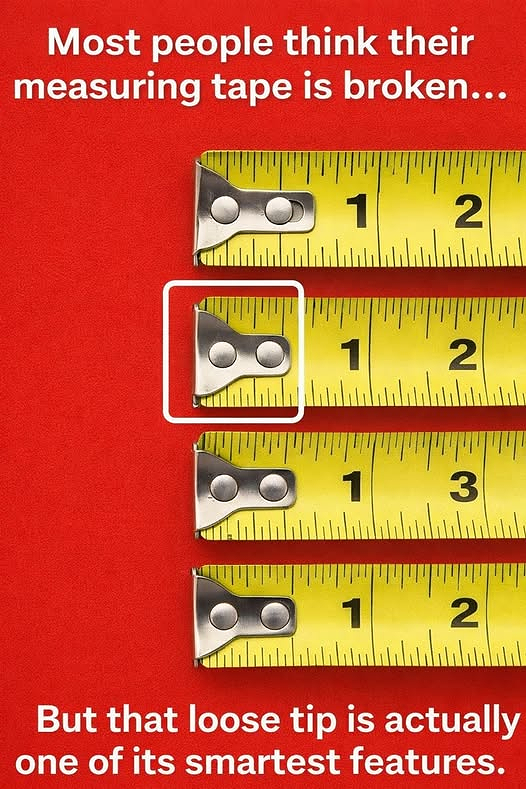
Measuring tapes are familiar tools in homes and workshops, yet one small feature often raises questions—the slightly loose metal hook at the end. At first glance, the movement can seem like a defect or early wear, especially when it shifts with light pressure. In reality, that flexibility is intentional and plays a key role in keeping measurements accurate. Understanding this detail can help users trust their tools and use them more effectively.
The confusion usually begins when the movement is noticed for the first time. Because the hook slides back and forth, some people assume it has become damaged or poorly constructed. Others attempt to tighten it, believing they are fixing a problem. The important step here is knowing what not to change. That slight play is engineered with precision, and altering it can actually compromise measurement accuracy rather than improve it.
The design works by compensating for the thickness of the metal hook itself. When measuring an external surface, such as the edge of a table, the hook presses inward, adjusting automatically by its own thickness. When measuring inside a space, like the distance between two walls, the hook pulls outward. This built-in movement removes the need for manual corrections and keeps readings consistent in both situations.
The next time a measuring tape tip shifts in your hand, it’s worth appreciating the design behind it. That small movement saves time, reduces mistakes, and ensures reliable results across different types of measurements. It is a practical example of thoughtful engineering—simple in appearance, yet essential to precision in everyday tasks.