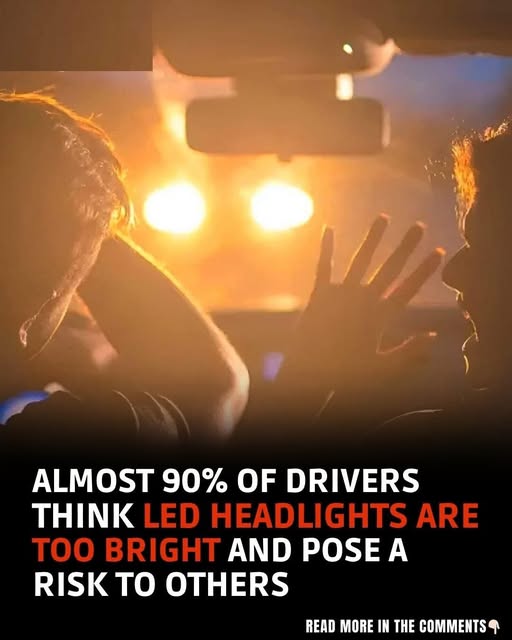
The moment arrives without warning: one instant the road ahead is calm, and the next your vision is overwhelmed by a burst of intense white light. For many drivers, this split-second glare from an oncoming vehicle has become a familiar and unsettling part of night travel. The brief disorientation forces drivers to rely on instinct until their eyes adjust, turning what should be a routine drive into a moment of strain and heightened focus.
Much of this change can be traced to advances in vehicle lighting. Modern LED and high-intensity discharge headlights are engineered to improve visibility for the driver using them, and in that respect, they often succeed. However, these systems produce a brighter, cooler light that is more sharply directed than older halogen bulbs. When combined with the higher profile of SUVs and trucks, the beams frequently align with the eye level of oncoming drivers, increasing discomfort and reducing perceived safety.
Minor technical details can intensify the problem. Headlights that are slightly misaligned—even by a small margin—can project concentrated light directly into another vehicle’s windshield. The result may include temporary vision loss, visual streaking, or lingering afterimages that take time to fade. At higher speeds, even a few seconds of impaired sight can feel unsettling, prompting drivers to adjust their speed or avert their gaze at precisely the wrong moment.
As automotive design continues to progress, questions are emerging about whether current lighting standards reflect real driving conditions. Discussions around adaptive headlight systems, improved alignment requirements, and smarter beam control are becoming more common. Brighter headlights were intended to enhance safety, but when they compromise the vision of others, that balance is disrupted. Until technology and regulations evolve further, many drivers will continue to brace for the sudden glare that transforms nighttime driving into a test of concentration and control.