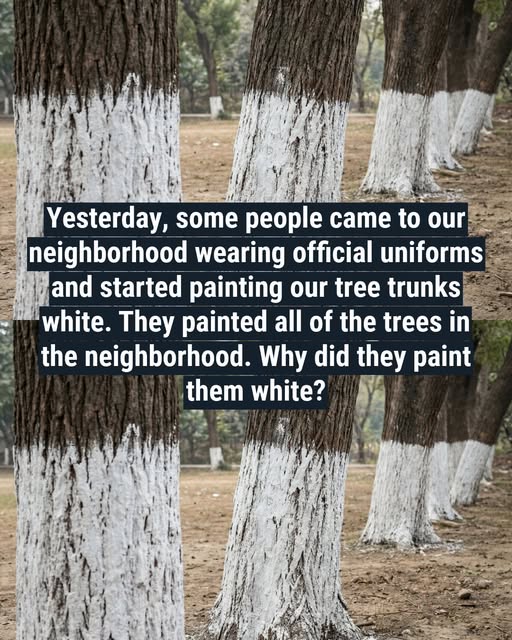
A tree with a white-painted lower trunk often catches the eye, but this practice has nothing to do with decoration. Gardeners and orchard caretakers use this method to protect trees from winter damage caused by rapid temperature changes. Cold nights followed by bright, sunny days can heat the bark unevenly, leading to splitting or cracking—a problem commonly referred to as sunscald.
Applying a light-colored coating helps reflect sunlight and keeps the trunk’s temperature more stable throughout the day. This reduces stress on the bark and lowers the risk of long-term damage. The technique is most often used on young trees, thin-barked varieties, and fruit trees, which are more vulnerable to these conditions. Water-based latex paint is typically chosen because it is safe, breathable, and effective when applied correctly.
For best results, the paint is usually diluted with water to create a thinner, more flexible layer that moves naturally with the tree. Some caretakers enhance the mixture with additives that improve durability and discourage insects from nesting in the bark. Brushing the paint on ensures full coverage, and many gardeners repeat the process annually, treating it as a seasonal protective routine similar to winterizing a home.
Although tree markings can sometimes indicate property lines or planned removal, a white-painted trunk serves a purely practical role. It signals attentive care rather than a visual statement. By using this simple technique, gardeners help preserve tree health, strengthen resilience against harsh weather, and support long-term growth—allowing trees to remain strong and thriving year after year.