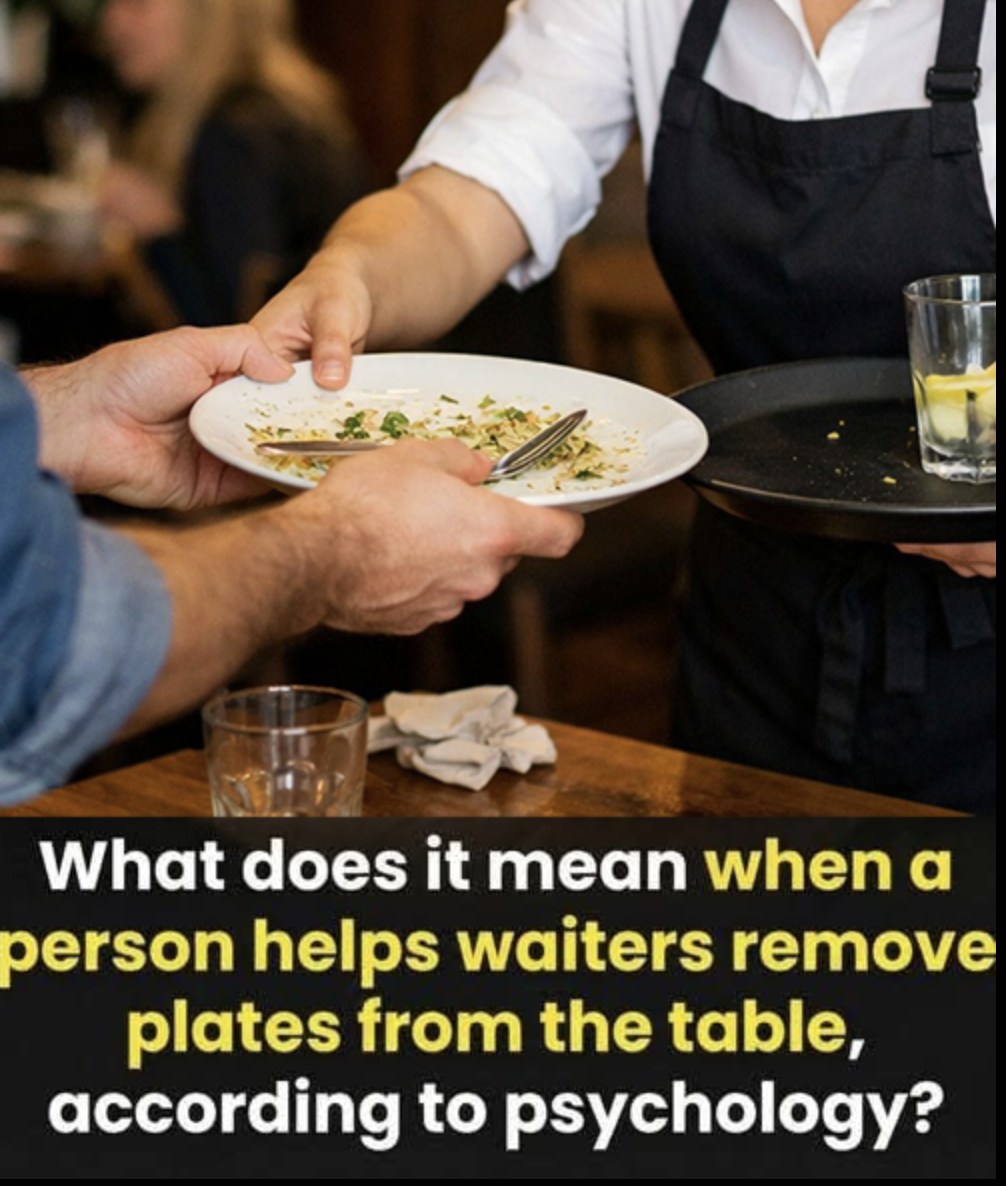
If you’ve ever stacked plates or gathered empty glasses before a server returns, you probably viewed it as simple courtesy. Yet small gestures like these can reflect deeper social awareness. In busy restaurants filled with movement and noise, a guest who quietly organizes the table is not seeking attention—they are responding instinctively to their surroundings. What appears minor on the surface can reveal meaningful patterns in how people relate to others.
Psychologists often describe this type of behavior as empathy in action. It involves noticing subtle cues—such as a server balancing multiple tasks—and responding in a practical way without being asked. Researchers who study moral development and social behavior explain that these micro-acts of assistance are examples of prosocial behavior: actions intended to benefit others without expecting recognition. The motivation typically stems from attentiveness rather than obligation.
Experience can also shape this instinct. Former restaurant employees frequently mention that they tidy tables because they remember the pace and physical demands of service work. Others act simply because they are attuned to signs of strain and prefer contributing rather than remaining passive. These responses require little effort but can create a brief moment of relief for someone navigating a demanding shift.
It’s important to recognize that cultural expectations vary; in some settings, guests assisting with cleanup may be discouraged. Still, the underlying principle remains consistent—responding thoughtfully to perceived need. In a world where much interaction occurs digitally, small in-person gestures can strengthen everyday civility. Whether or not you choose to tidy the table, the decision often reflects how closely you observe and engage with the people around you.