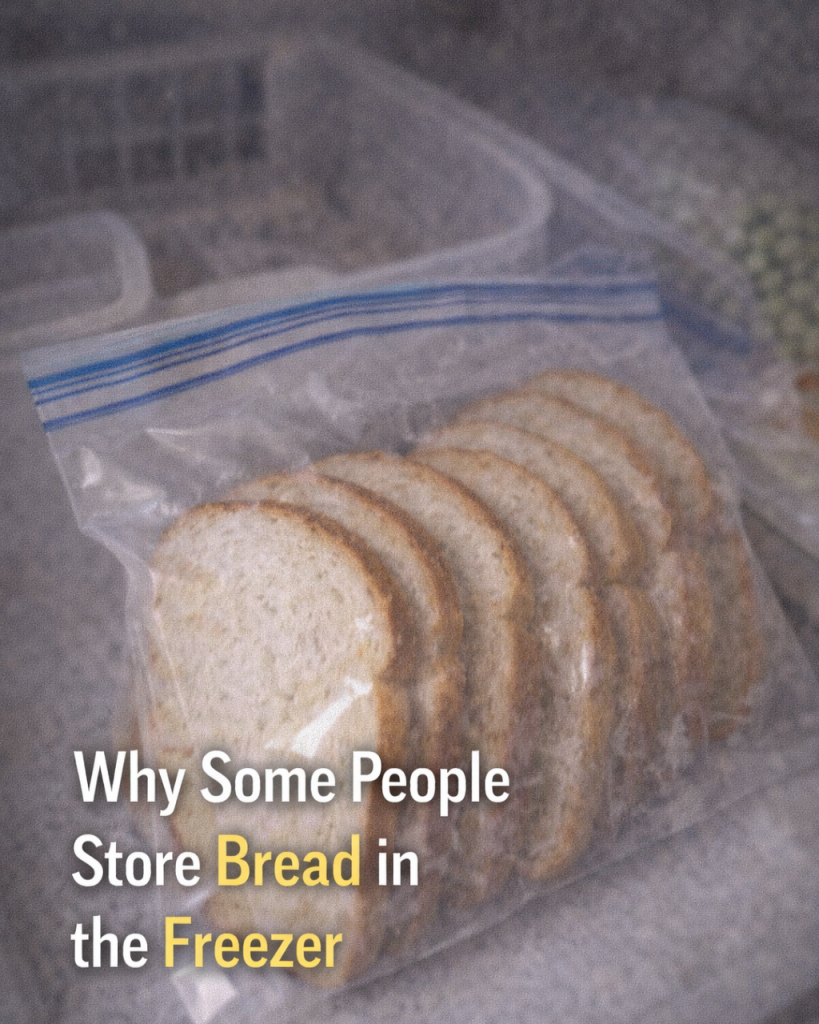
At first glance, keeping bread in the freezer sounds unnecessary. Most of us are used to placing a loaf on the counter or inside a bread box. However, freezing bread is not a strange habit—it’s a practical strategy used by households, bakeries, and restaurants to extend freshness. Once you understand how bread changes over time, the freezer becomes less of a backup plan and more of a smart routine.
The key issue isn’t cold temperatures—it’s time. Bread deteriorates mainly because of mold growth and staling. Refrigeration can speed up staling due to starch changes, which is why bread often feels dry in the fridge. Freezing works differently. At low temperatures, mold cannot develop, and the chemical processes responsible for staleness slow dramatically. As a result, properly frozen bread can retain much of its original texture and flavor for weeks.
Freezing also adds flexibility to daily use. You don’t need to thaw an entire loaf before enjoying it. Individual slices can go straight into the toaster or thaw within minutes at room temperature. This “slice-as-needed” approach prevents waste and eliminates the pressure to finish a loaf quickly. Many cafés and food businesses rely on this method because it preserves quality while offering convenience.
To make freezing effective, preparation matters. Always store bread in airtight freezer bags, remove as much air as possible, and freeze it sliced for easy portioning. Avoid repeated thawing and refreezing, as exposure to air can cause freezer burn and alter texture. Most common breads—white, whole grain, sourdough, and rye—freeze well. While very crusty artisan loaves may lose some crispness, toasting restores much of their appeal. In the end, freezing bread is a simple way to reduce food waste, protect your grocery budget, and keep your kitchen stocked with fresh-tasting slices whenever you need them.