
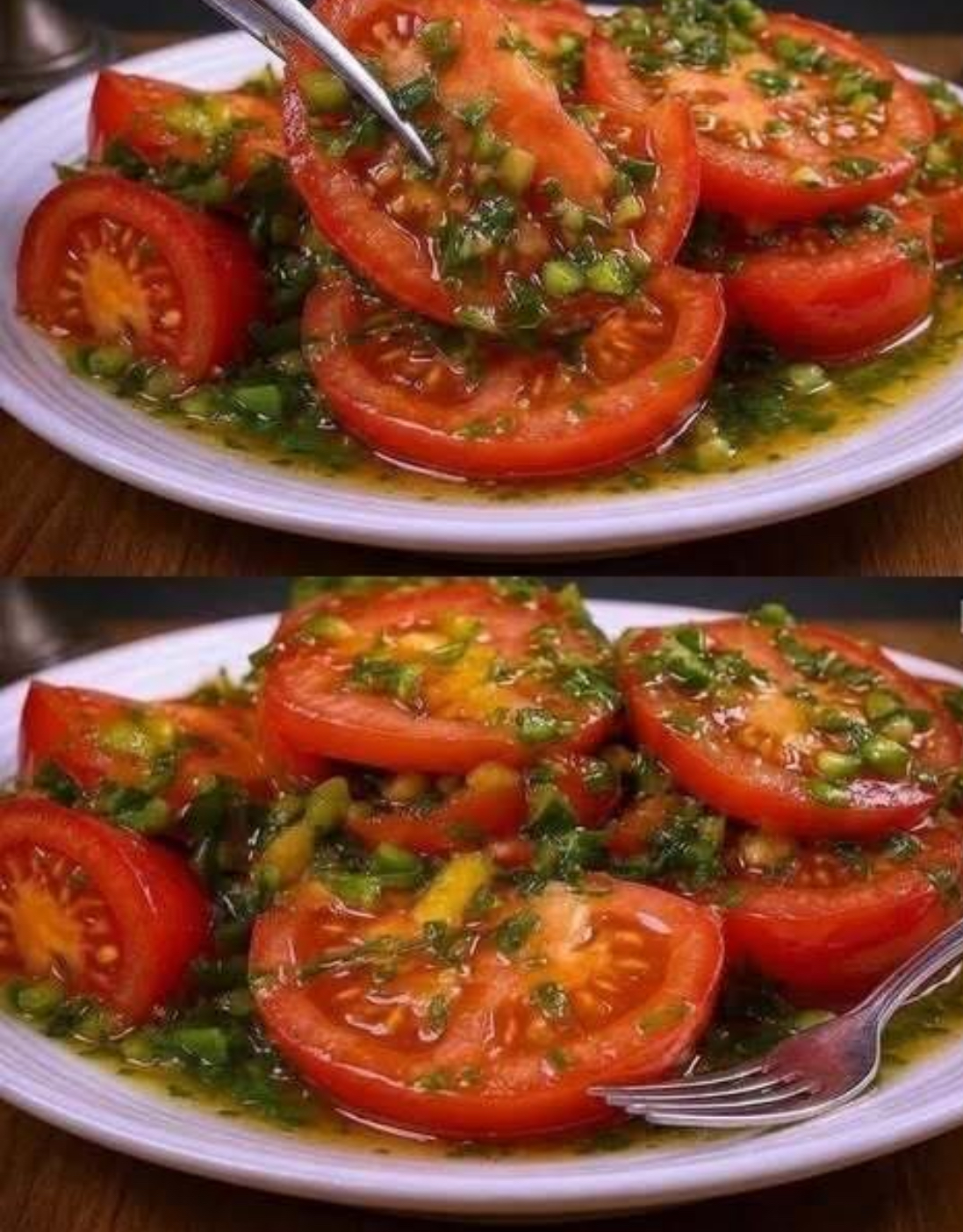
Sometimes the most memorable dishes begin with the simplest components. A thoughtfully prepared tomato salad can transform familiar ingredients into a vibrant centerpiece. When ripe tomatoes are combined with balanced seasoning and a well-crafted dressing, the result is bright, refreshing, and satisfying without feeling heavy. This kind of salad works equally well as a light lunch, a side for grilled dishes, or a colorful addition to a summer table—demonstrating that simplicity, when handled carefully, can feel special.
The key to exceptional flavor starts with selecting high-quality tomatoes. In-season varieties tend to offer the best sweetness and depth. Cherry tomatoes deliver concentrated bursts of flavor, while heirloom options bring visual appeal and subtle complexity. Thin slices of red onion add contrast, and soaking them briefly in cool water can mellow their sharpness. Fresh herbs such as basil, parsley, or chives provide aroma and freshness. A pinch of flaky sea salt enhances natural juices, and freshly ground black pepper introduces gentle warmth.
The dressing ties everything together. Extra virgin olive oil creates a smooth base, complemented by lemon juice or red wine vinegar for brightness. A small amount of Dijon mustard adds structure, while a touch of honey balances acidity. Finely minced garlic and a bit of citrus zest deepen the flavor profile. Once whisked and poured over the salad, the dressing mingles with the tomato juices, forming a light coating. Allowing the mixture to rest for a few minutes helps the ingredients harmonize.
Beyond its appealing taste and texture, this tomato salad fits easily into a balanced lifestyle. Tomatoes contribute vitamins and antioxidants, and olive oil provides beneficial fats when used in moderation. The dish pairs beautifully with grilled fish, roasted vegetables, or whole-grain pasta, and it can be customized with additions like fresh cheese, toasted nuts, or cooked grains for a heartier version. Preparing it can also be a calming ritual, from slicing to arranging. Ultimately, a carefully assembled tomato salad reminds us that fresh ingredients and mindful preparation can create something truly memorable.