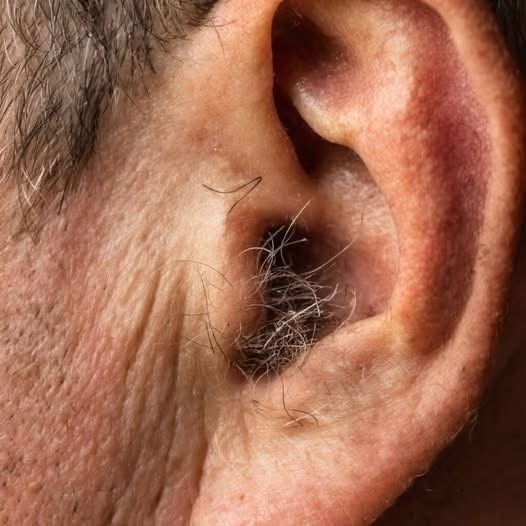
Noticing hair growing around or inside the ears can come as a surprise, especially later in life. Many people first observe it in their fifties or sixties and may feel uncertain about what it means. In reality, this change is a normal part of aging. It reflects gradual hormonal and genetic influences rather than any underlying health concern. While it may attract attention or even humor, it is simply another example of how the body evolves over time.
As the body ages, hair growth patterns shift in different ways. It is common for scalp hair to become thinner while hair in areas such as the ears, nose, or eyebrows becomes more noticeable. This happens because hair follicles respond differently to hormones over the years. Androgens—hormones that influence hair growth—can stimulate certain follicles while others become less active. Men often experience more visible ear hair, while women may notice changes later in life as hormone levels adjust. Genetics also play an important role, influencing how much hair grows and where it appears.
From a functional perspective, hair in the ear area serves a purpose. It helps filter small particles and contributes to the body’s natural protective mechanisms. Over time, as growth becomes more visible, it may seem unusual, but it is simply a continuation of this biological role. Common misconceptions—such as linking ear hair to illness or other conditions—are not supported by evidence. Similarly, trimming hair does not cause it to grow back thicker; it only appears that way because of how the hair is cut.
For those who prefer to manage it, grooming is a personal choice and can be done safely with appropriate tools such as small trimmers designed for this area. Care should be taken to avoid irritation or injury, especially inside the ear canal. Ultimately, ear hair is not a flaw but a natural sign of the body’s ongoing changes. Understanding this can help replace unnecessary concern with a more balanced and informed perspective on aging.