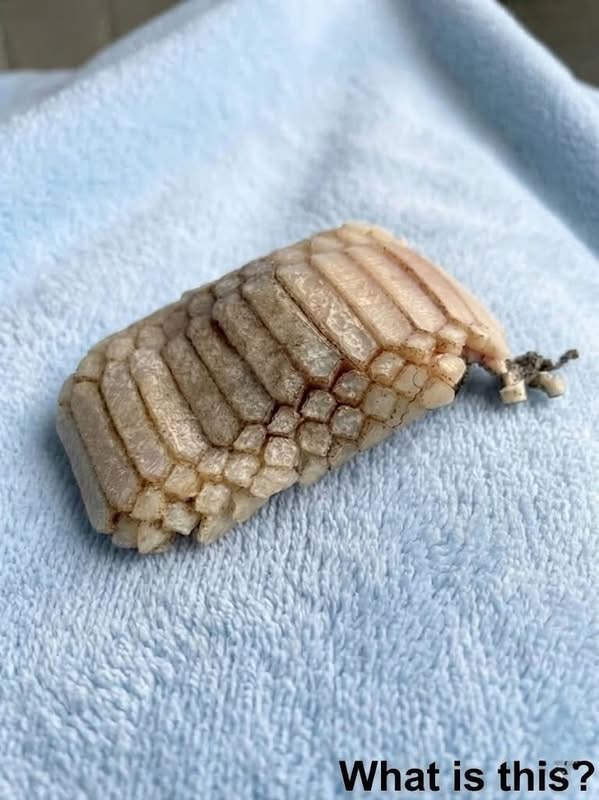
A single photograph shared online recently captured massive attention after showing a strange object washed up along a beach shoreline. The unusual shape, rough texture, and tooth-like patterns immediately sparked confusion across social media, with many viewers struggling to identify what they were seeing. Some people compared the object to a creature from a science fiction movie, while others speculated it could be an unknown deep-sea organism. As the image spread rapidly online, curiosity quickly turned into widespread debate fueled by dramatic theories and viral speculation.
Part of the fascination came from the object’s unusual appearance when viewed upside down. The layered ridges and repeating patterns resembled rows of sharp teeth or mechanical structures, causing many internet users to assume the image showed something dangerous or previously undiscovered. Online discussions ranged from deep-ocean mutations to elaborate conspiracy theories involving hidden experiments or mysterious marine species. The more closely people examined the image, the more unfamiliar and unsettling it appeared to viewers who had never encountered anything similar before.
Eventually, marine biology experts stepped in to explain what the viral image actually showed. The mysterious “monster” turned out to be the underside of a harmless marine mollusk called a Chiton. Chitons are common sea creatures found attached to rocks along coastlines around the world. From above, they usually appear small, flat, and unremarkable, protected by overlapping shell plates that help them survive rough ocean conditions. However, when flipped over, their muscular underside and feeding structures create patterns that can look surprisingly unusual to anyone unfamiliar with marine biology.
The viral reaction highlighted how easily unfamiliar images can trigger dramatic assumptions online. What many people interpreted as evidence of something dangerous was actually a normal example of nature viewed from an unexpected angle. Interestingly, chitons are scientifically remarkable for another reason: parts of their feeding structure contain magnetite, one of the hardest naturally occurring biological materials known in the animal world. In the end, the story became less about fear and more about perspective. Sometimes the most surprising discoveries are not hidden monsters, but ordinary parts of nature seen in a way most people have never noticed before.