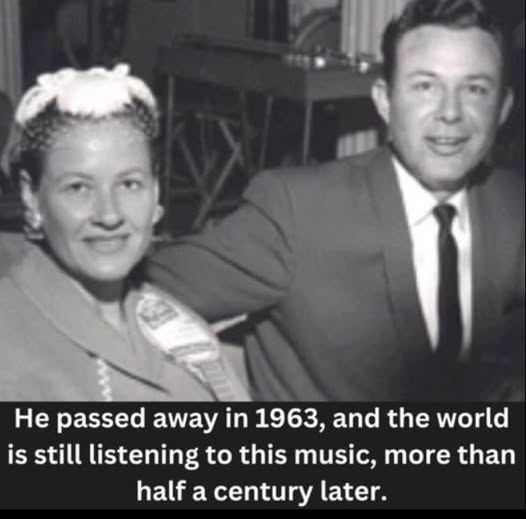
In 1960, a softly delivered recording shifted the course of country music without relying on volume or spectacle. Its strength came from restraint—clear phrasing, measured emotion, and an almost conversational tone that invited listeners closer rather than overwhelming them. At a time when the genre was evolving, the song stood out by proving that simplicity and emotional depth could coexist, creating a sound that felt intimate, warm, and timeless.
The story behind He’ll Have to Go began with an unplanned moment. Songwriters Joe and Audrey Allison drew inspiration from a man overheard speaking quietly into a telephone, trying to mend a strained connection. That brief, vulnerable exchange shaped the song’s opening line and emotional core. With production guided by Chet Atkins, the arrangement remained deliberately sparse, ensuring the focus stayed on feeling rather than flourish.
The next step in its journey was its unexpected reach. The song quickly rose to the top of the country charts and crossed into mainstream pop radio, helping establish what later became known as the Nashville Sound. It demonstrated that country music could broaden its audience without sacrificing sincerity. Although many artists recorded their own interpretations over the years, the original version maintained a closeness and honesty that proved difficult to replicate.
At the heart of the recording was Jim Reeves, whose smooth baritone and controlled delivery turned the song into a career-defining moment. Even after his life ended prematurely in 1964, the recording continued to resonate across generations. Its ongoing presence in radio playlists, films, and tributes serves as a reminder that lasting influence doesn’t always arrive loudly—sometimes it unfolds quietly, one heartfelt line at a time.