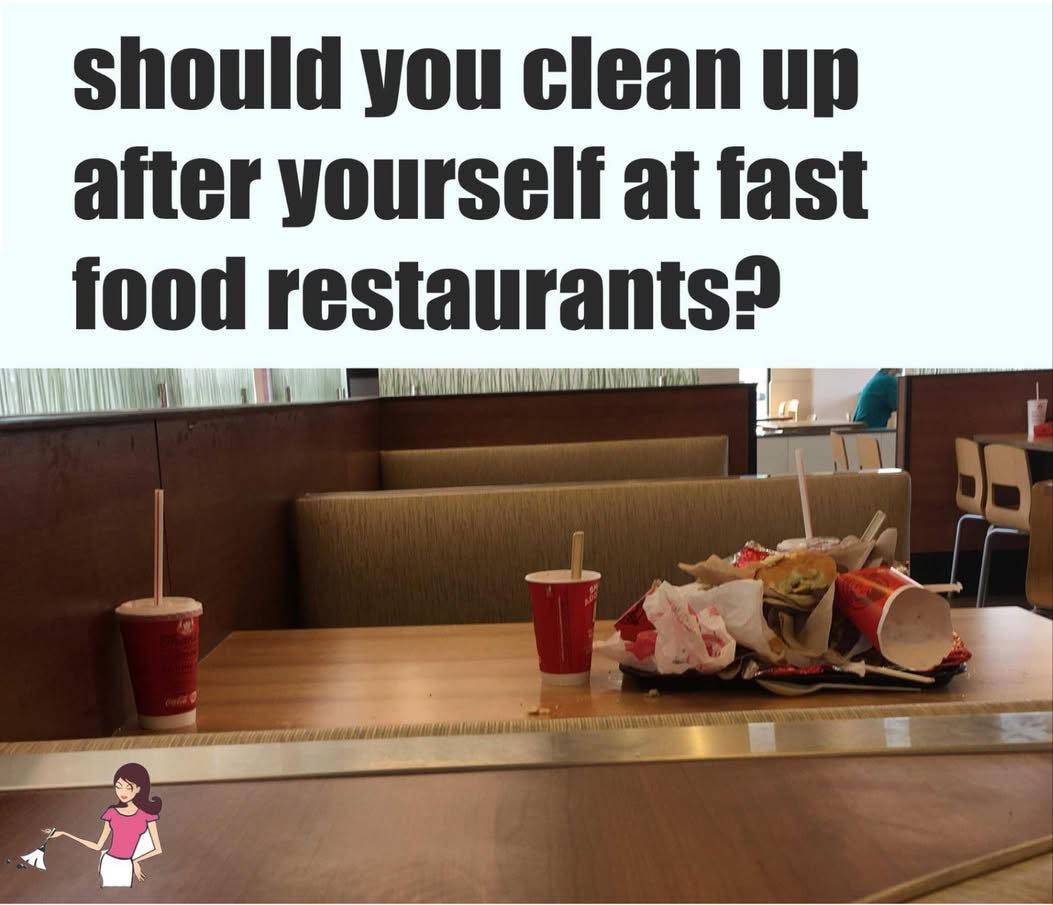
Step into almost any fast food dining area and you’ll notice the same scene: some tables spotless, others scattered with trays and wrappers. How to decide whether to clear your own space often sparks quiet debate. With no servers assigned and a focus on speed, fast food blurs the lines between personal responsibility and staff duties.
How the self-service model works helps explain why opinions differ. Customers order at the counter, collect their meals, and leave when finished, which leads many to view basic cleanup as part of the experience. Others see cleanup as a service included in the price, assuming employees are responsible for restoring tables between guests. Both views stem from reasonable expectations.
How small actions affect shared spaces is where common ground usually forms. Tossing trash or returning a tray takes little time but can ease pressure on workers who are balancing multiple tasks. It also helps keep seating available and inviting for the next customer. For families, these habits often double as simple lessons in courtesy and respect for public areas.
How to strike a balance is ultimately a personal choice. While no one is formally required to tidy up, leaving excessive messes can feel discourteous in a communal setting. A quick check before walking away—asking whether you’d feel comfortable sitting at the table you’re leaving—often provides a clear answer. In shared spaces, a moment of consideration goes a long way.