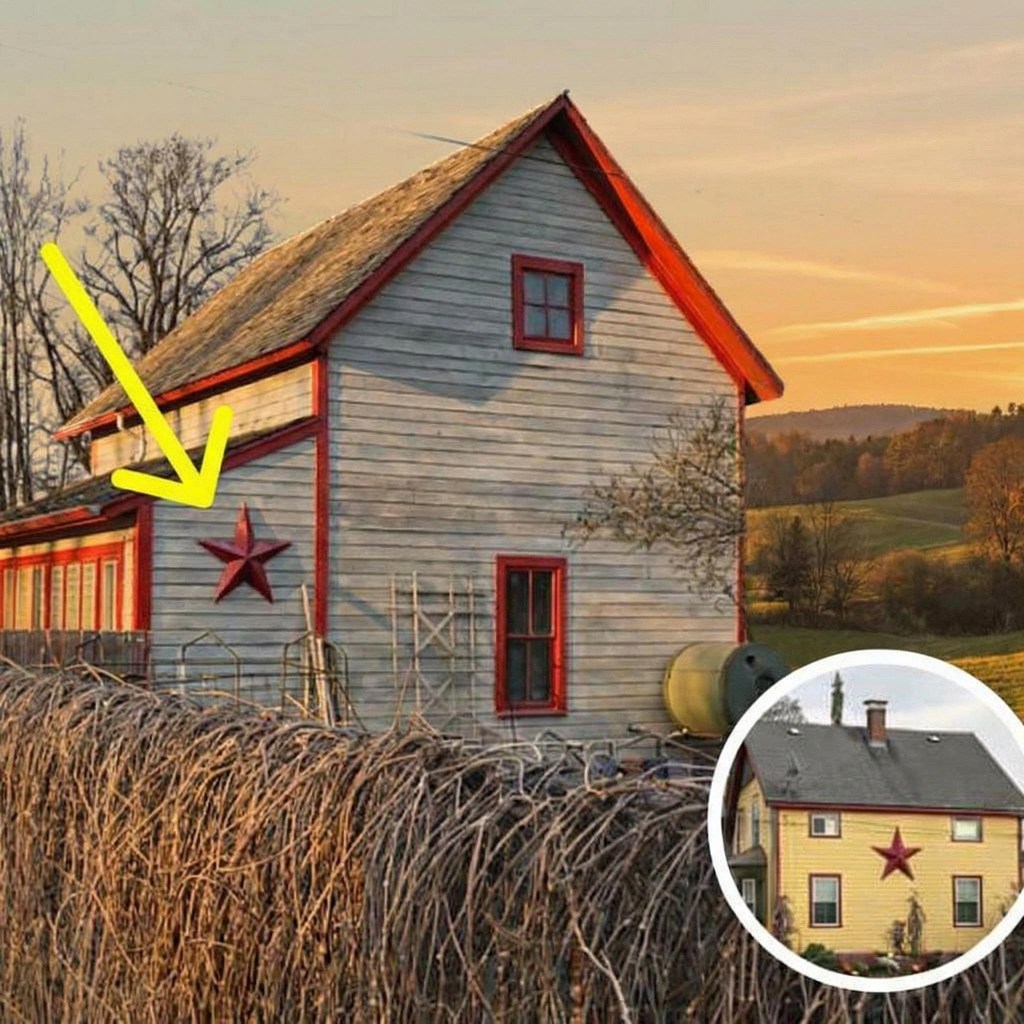
Toward the end of 2020, a surprising claim began circulating online, suggesting that five-pointed stars displayed on homes were secret signals tied to private lifestyles. The idea spread quickly through social media posts and screenshots, despite offering no reliable evidence. For many homeowners, the rumor was puzzling, and for those familiar with the history of these decorations, it was clearly inaccurate.
The symbols in question are known as barn stars, a long-standing decorative tradition in rural American architecture. They are especially associated with Pennsylvania Dutch communities, where they have been used for generations on barns, houses, and outbuildings. Historically, these stars represented values such as good fortune, protection, and pride in one’s property. While different colors were sometimes chosen for personal or symbolic reasons, there was never a hidden or standardized code behind their display.
As time passed, barn stars moved beyond their regional roots and became popular decorative elements across the country. Today, they appear on suburban homes, fences, and even interior walls, and are widely available through home décor retailers. This widespread and commercial use further undermines the idea that they function as discreet signals. The rumor also overlooks a basic reality: private communities do not rely on permanent, highly visible decorations to communicate sensitive information.
This episode serves as a reminder of how easily misinformation can take hold when symbols are misunderstood. Social media often amplifies surprising claims, even when they lack context or historical grounding. In truth, barn stars are expressions of heritage, craftsmanship, and tradition. Understanding their genuine meaning allows people to appreciate them as they were intended—simple, visible symbols of home and history, not coded messages.