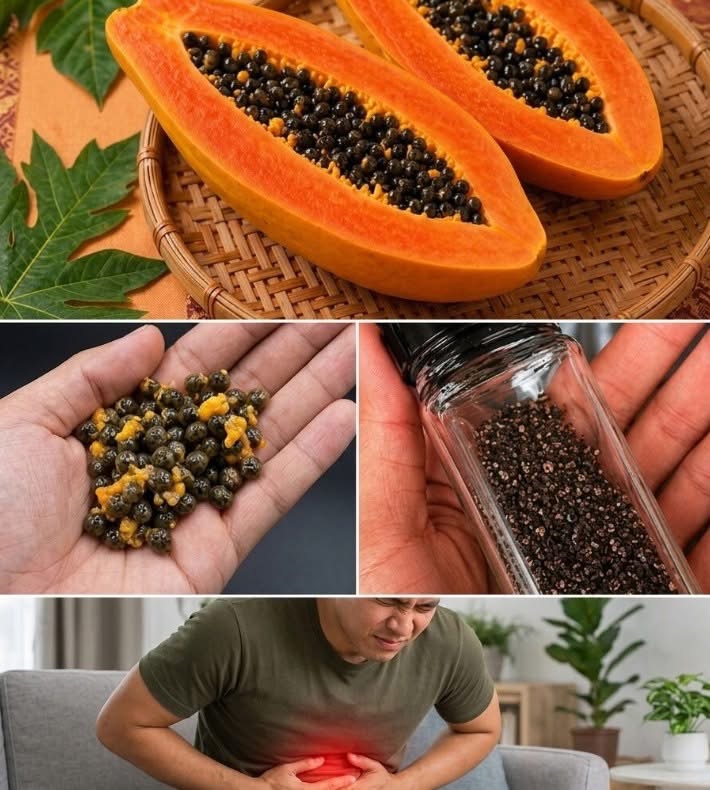
Papaya is widely appreciated for its sweet, vibrant flesh, while the small black seeds inside are often discarded without much thought. Recently, however, these seeds have gained attention for their unique composition, which includes natural enzymes, oils, and plant compounds. Rather than being treated as waste, they can be viewed as an optional addition to a balanced diet when used thoughtfully and in small amounts.
A practical way to approach papaya seeds is to understand how they are typically used. Their naturally peppery, slightly bitter flavor means they are rarely eaten on their own. Instead, some people choose to dry and grind them, using a pinch as a seasoning or mixing them into smoothies. This method allows for controlled use while making their strong taste more manageable within everyday meals.
From a nutritional perspective, papaya seeds contain compounds that have been studied for their role in digestion and general wellness. They also provide antioxidants, which contribute to maintaining normal cellular function. While traditional uses have linked them to additional benefits, it’s important to recognize that research is still evolving, and they should be seen as a complementary food rather than a primary source of nutrition.
Moderation remains essential when incorporating papaya seeds into your routine. Because they are concentrated in flavor and composition, small quantities are generally sufficient. By approaching them with balance and awareness, they can serve as a reminder that many parts of whole foods offer value—even those we might usually overlook.