
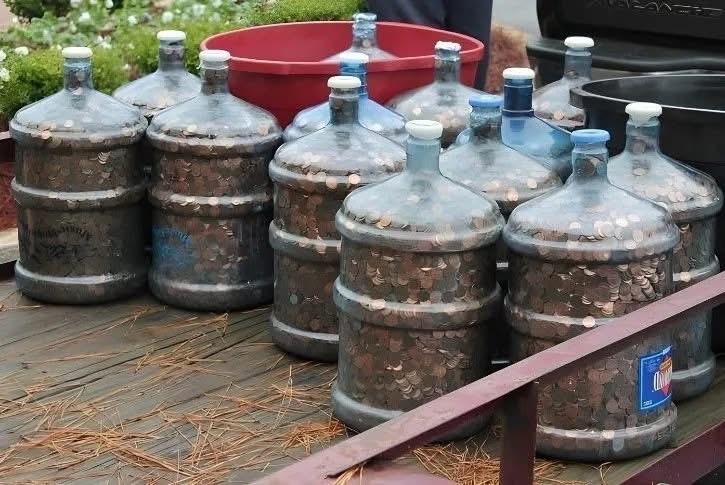
What began as a simple pastime eventually became a meaningful personal tradition for Anders. Many years ago, he started picking up pennies he noticed on sidewalks, parking lots, and public spaces. To him, each coin carried a small but powerful reminder: a chance to pause and reflect on gratitude. Over time, Anders came to see these tiny discoveries as gentle prompts to appreciate life’s everyday blessings and remain mindful of the good things around him.
As the years passed, the habit turned into a quiet routine. Whenever he spotted a penny on the ground, he would pick it up and add it to a growing collection stored in large containers at home. Anders often explained that the coins reminded him to take a moment of reflection, especially on busy days when it was easy to overlook gratitude. What began as a symbolic gesture gradually transformed into a decades-long commitment to noticing small opportunities for thankfulness.
After 45 years of saving these coins, Anders finally decided it was time to count them. With the help of bank employees, the containers were opened and the pennies carefully sorted and tallied. The process took several hours, and when the final total was calculated, the collection came to $5,136.14. Although the amount averaged just over a hundred dollars per year, the value of the habit itself had been far greater—serving as a daily reminder of patience, consistency, and appreciation.
Anders chose to use the money in practical and meaningful ways. Part of the savings helped cover a dental expense, another portion supported a family outing, and the remainder went toward charitable giving through his local church. In the end, the collection represented much more than loose change. It showed how small, consistent actions—guided by gratitude—can accumulate into something genuinely impactful over time.