
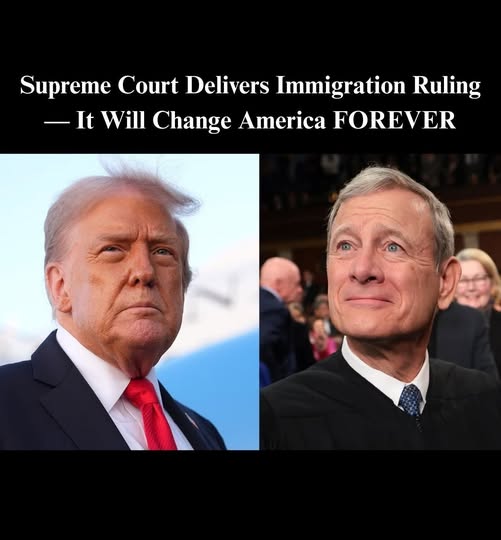
The U.S. Supreme Court recently allowed the administration of former President Donald Trump to move forward with plans to end temporary legal protections for more than 500,000 migrants from Venezuela, Cuba, Haiti, and Nicaragua. The ruling does not finalize the broader legal dispute but permits the policy change to proceed while court challenges continue in lower courts. As a result, many individuals who previously received temporary legal status could face uncertainty regarding their ability to remain in the United States.
The decision temporarily lifted an earlier order from a federal judge in Massachusetts that had blocked the government’s plan to terminate a humanitarian parole program. That program, originally expanded under the Biden administration, allowed eligible migrants from the four countries to enter the U.S. legally with financial sponsors and receive two-year renewable permission to live and work in the country.
Importantly, the Supreme Court’s action does not determine the final legality of the policy. Instead, it allows the administration to begin revoking those protections while the case moves through the appeals process. Legal analysts say future court rulings will ultimately determine whether the executive branch has broad authority to end or modify humanitarian parole programs on this scale.
Because the program covered hundreds of thousands of migrants, the case has drawn significant national attention. Supporters of the policy argue it reinforces government control over immigration programs and restores stricter enforcement. Critics, meanwhile, warn that ending the protections could create uncertainty for families and communities who relied on the program to live and work legally in the country. For now, the legal process continues, and additional court decisions are expected in the months ahead.