
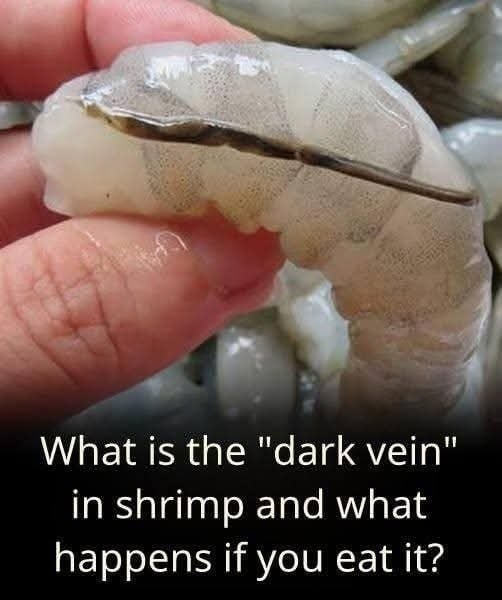
When preparing shrimp at home, many cooks notice a thin dark line running along the back and assume it is a vein. In fact, that line is the shrimp’s digestive tract, a narrow channel where food is processed as the shrimp feeds. The term “vein” became popular simply because of its appearance, but shrimp do not have veins in the same way humans do. When shrimp are cleaned and cooked properly, this tract is generally harmless to consume, and removing it is usually more about improving flavor, texture, and presentation than about food safety.
In larger shrimp, the digestive tract can sometimes contain small particles collected from the sea floor, such as sand or grit. If left in place, these particles may create a slightly grainy texture that some diners find less appealing. In dishes where the natural taste of shrimp plays a central role—like grilled shrimp or simple seafood sautés—many cooks choose to remove the tract to ensure a smoother bite and a cleaner flavor profile.
The process of deveining shrimp is straightforward and takes only a moment. After removing the shell, use a small knife to make a shallow cut along the back of the shrimp. This exposes the dark line, which can be gently lifted out with the tip of the knife or rinsed away under cool running water. With a little practice, this quick step can easily become part of the normal preparation routine.
At the same time, deveining is not always necessary. Smaller shrimp used in soups, pasta sauces, stir-fries, or stews often cook perfectly well without removing the tract because it is barely noticeable once the dish is prepared. By understanding what that dark line actually represents and when it may affect the final dish, home cooks can approach shrimp preparation with more confidence and flexibility in the kitchen.