
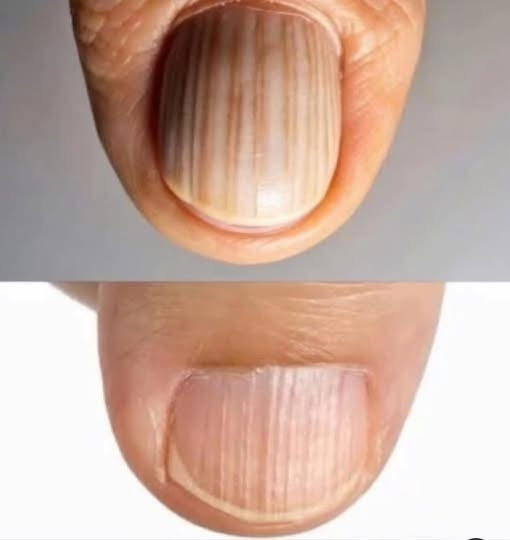
Small changes in fingernails often go unnoticed, yet they can sometimes offer useful clues about overall wellness. Dermatology experts frequently note that nails reflect aspects of nutrition, circulation, and general health. One detail many people observe is the appearance of stripes or ridges across the nail surface. In many cases these marks are harmless, but certain patterns may signal that the body is responding to internal changes. Understanding the differences can help people decide when a closer look might be worthwhile.
Vertical ridges, which run from the base of the nail toward the tip, are the most common type. These lines often become more noticeable as people age, much like fine lines that appear on the skin over time. In most situations they are simply a natural part of the body’s aging process. However, if these ridges appear suddenly or are accompanied by brittle texture or unusual color changes, some healthcare professionals suggest evaluating possible nutritional factors, such as low levels of iron, magnesium, or vitamin B12.
Horizontal ridges—sometimes referred to by specialists as Beau’s lines—tend to attract more attention. These lines move across the nail rather than along its length and may appear after the body experiences significant physical stress. Illness, high fever, certain medications, or temporary disruptions in normal nail growth can sometimes lead to this pattern. Because nails grow slowly, these lines can act like a timeline, showing when the body experienced a period of strain or recovery.
Color changes within stripes may also deserve attention. Dark or pigmented lines occasionally occur naturally, especially in individuals with deeper skin tones, but experts recommend monitoring any new or rapidly changing markings. White streaks or spots are more common and are often linked to minor nail trauma or contact with certain cosmetic products. As with many health-related signs, the key is observation. If nail changes appear alongside pain, swelling, or noticeable shape differences, consulting a qualified healthcare professional can provide clarity and reassurance.