
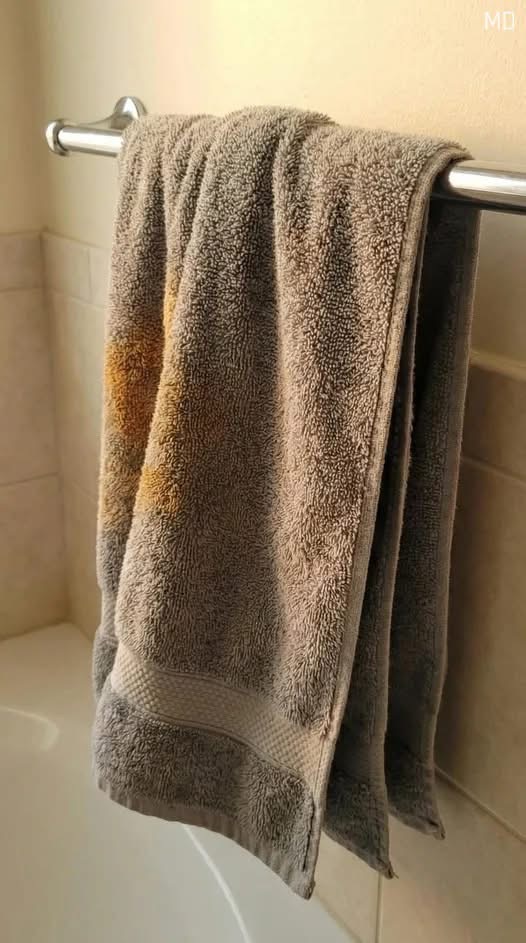
If you’ve spotted unexpected orange or pink patches on your towels — especially darker ones — you’re not alone. A common culprit is benzoyl peroxide, an ingredient frequently found in acne treatments. While effective for skincare, benzoyl peroxide is also a powerful oxidizing agent. Rather than creating a typical stain, it removes dye from fabric fibers, leaving behind lighter patches that often appear orange, yellow, or pink on navy, black, or charcoal towels. A helpful clue: if the mark looks lighter than the surrounding fabric, it’s likely discoloration from bleaching, not a spill.
It’s important to know that once fabric dye has been stripped, it cannot be restored. Standard detergents or stain removers won’t bring back the original color because the pigment itself has been removed. In some cases, washing affected towels with other items may spread residual product and cause additional fading. Although benzoyl peroxide is the most frequent cause, similar discoloration can sometimes stem from other factors. High iron levels in water may leave reddish-brown marks, and certain bathroom bacteria can create pinkish buildup — though these usually clean away with proper washing.
The good news is that protecting your linens doesn’t require abandoning your skincare routine. A few simple adjustments can make a significant difference. Consider keeping a set of white towels specifically for face use, as white fabric won’t show bleaching. After applying acne treatments, allow the product to absorb fully and rinse your skin thoroughly before drying off. Washing your face separately from your body towels can also help limit accidental contact with treated areas.
If some towels are already discolored, repurposing them as cleaning cloths or gym towels can extend their usefulness. Moving forward, paying attention to product labels and drying habits can help preserve fabric color. With mindful care, you can maintain both healthy skin and fresh-looking linens without frustration.