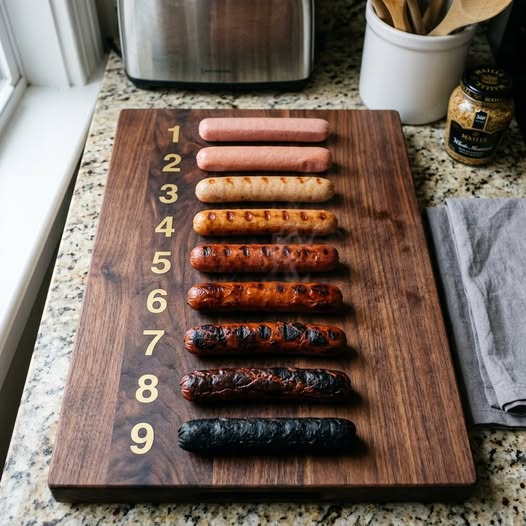
Cooking sausages might seem easy at first glance, but achieving the ideal result requires attention to detail. From pale and undercooked to golden and perfectly done—or even overcooked—each stage tells you something important about the process. Learning to recognize these visual cues can help you prepare sausages that are both enjoyable to eat and properly cooked, avoiding common mistakes along the way.
In the early stage of cooking, sausages often appear light in color and soft in texture, with little to no browning. This indicates that the heat has not yet fully penetrated the interior. Rushing this phase can lead to uneven cooking, where the outside looks ready but the inside is not fully prepared. Using moderate heat and allowing enough time ensures that the sausage cooks evenly from the center outward, creating a safer and more consistent result.
As cooking continues, the sausages begin to develop a rich golden-brown surface. This is typically the ideal stage, where the exterior becomes slightly crisp while the inside remains tender and juicy. Turning them regularly helps distribute heat evenly, preventing one side from browning too quickly. Maintaining a steady, medium temperature allows flavors to develop naturally without drying out the meat.
If left on the heat for too long, sausages can become overly dark and dry. Excessive charring may affect both taste and texture, resulting in a less pleasant eating experience. While a lightly crisp exterior can enhance flavor, balance is key. A well-cooked sausage should have a warm, evenly cooked interior and a lightly browned exterior—offering both flavor and texture without being overdone.