
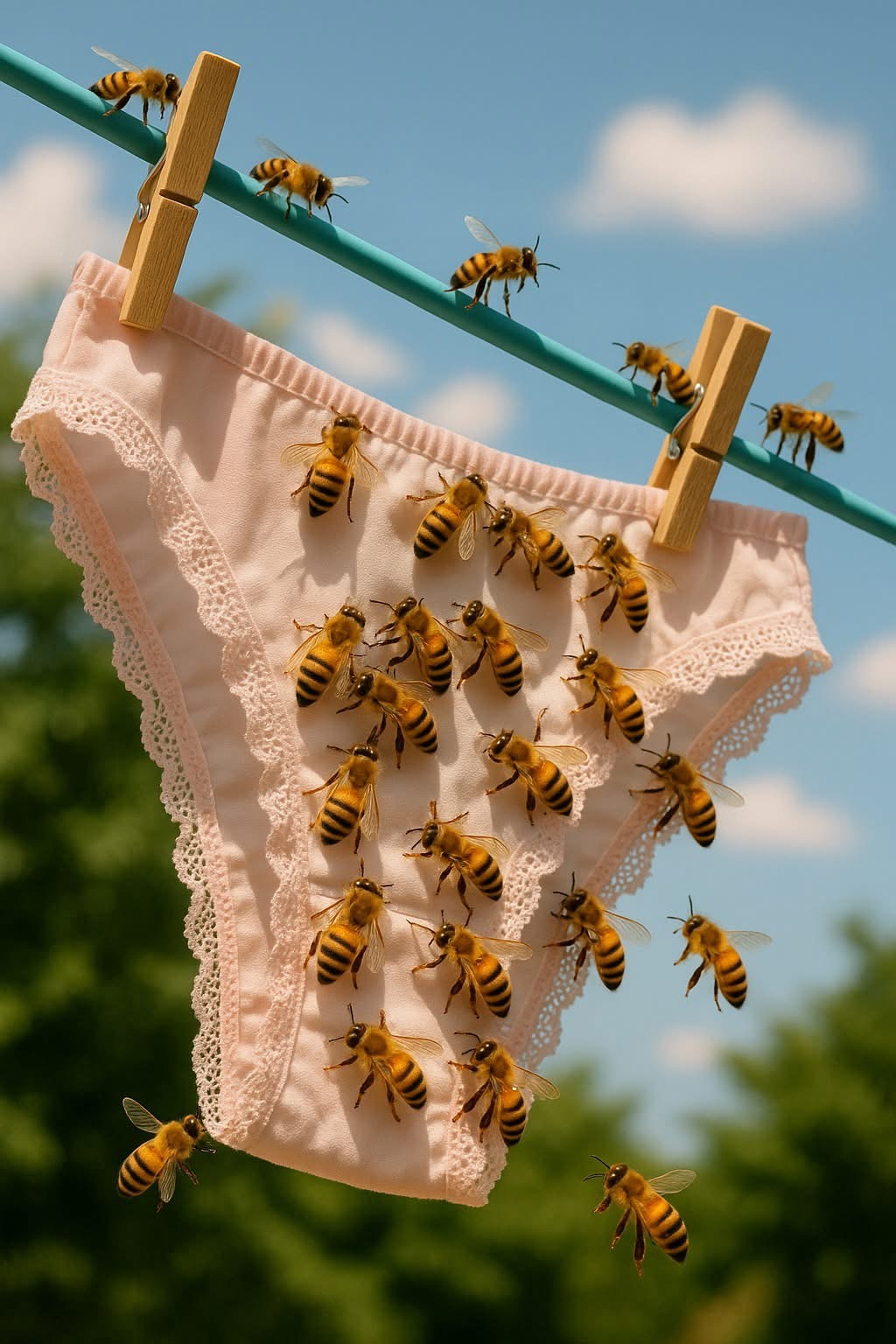
Drying clothes outdoors on a sunny day feels simple and refreshing, but occasionally it attracts unexpected visitors. Some people are surprised to find bees hovering around or landing on freshly washed garments. While it may seem unusual, there’s a practical explanation rooted in how bees navigate their environment. These pollinators rely heavily on scent and visual cues to locate nectar sources, and certain laundry conditions can unintentionally imitate those signals.
Many detergents and fabric softeners are infused with floral or fruity fragrances. To a bee, these scents can resemble the aroma of blooming plants. When fabrics carry those lingering notes, especially in warm weather, they may trigger investigative behavior. Bees are not targeting clothing itself—they are responding to smell patterns that align with their natural foraging instincts.
Color and light exposure also influence this behavior. Bees are naturally drawn to bright, pale, or pastel shades because these colors often resemble petals. When light-colored laundry hangs in direct sunlight, it can appear visually similar to a cluster of flowers. The combination of fragrance, brightness, and warmth creates a sensory environment that may briefly capture a bee’s attention.
Fortunately, this situation is typically harmless. Bees rarely sting unless they feel threatened. To reduce the likelihood of visits, consider choosing unscented or mildly scented laundry products, drying clothes in shaded areas, or rotating darker fabrics outdoors. Recognizing how everyday routines interact with nature helps minimize surprises while supporting a peaceful coexistence with beneficial insects.