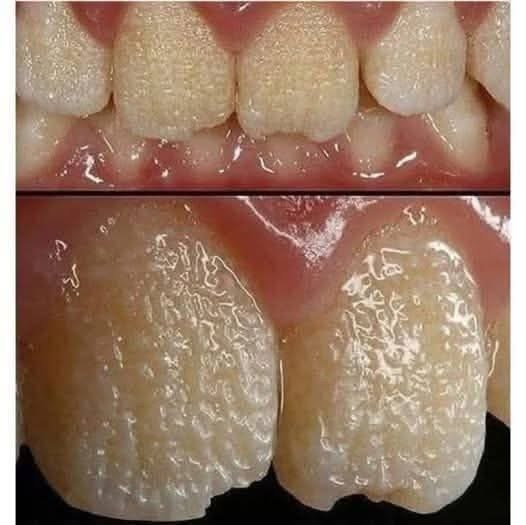
If teeth appear unusually yellow, chip easily, or feel overly sensitive, everyday habits like coffee consumption or brushing technique may not be the only explanation. In rare situations, the cause can trace back to early tooth development. One condition linked to these changes is Amelogenesis Imperfecta (AI), a genetic disorder that affects the formation of enamel—the protective outer layer of the teeth. When enamel does not develop as expected, teeth may look discolored, feel fragile, or have a pitted or smaller appearance.
Enamel is the body’s hardest material and forms through a carefully regulated biological process during childhood. In individuals with AI, inherited genetic variations interfere with this process, resulting in enamel that may be thinner than normal, softer in texture, or less mineralized. Because enamel acts as a shield for the inner layers of the tooth, reduced protection can lead to heightened sensitivity to temperature or sweet foods. Both primary (baby) teeth and permanent teeth can be affected.
There are several recognized forms of Amelogenesis Imperfecta. In one type, enamel may be thin but relatively firm. In another, enamel forms at normal thickness yet lacks its usual strength. A third variation involves enamel that is especially fragile and prone to wearing away quickly. Dentists typically identify the condition through clinical examination and dental imaging, and in some cases, genetic testing may be recommended to confirm the diagnosis—particularly when there is a family history.
Although AI cannot be reversed through whitening products or routine brushing alone, modern dental care offers effective management options. Protective treatments such as crowns, bonding, veneers, fluoride applications, and desensitizing therapies can help strengthen teeth and improve appearance. Early diagnosis is especially important for preserving tooth structure and maintaining comfort. With consistent dental supervision and appropriate care, individuals with AI can support oral health and maintain confidence in their smiles.