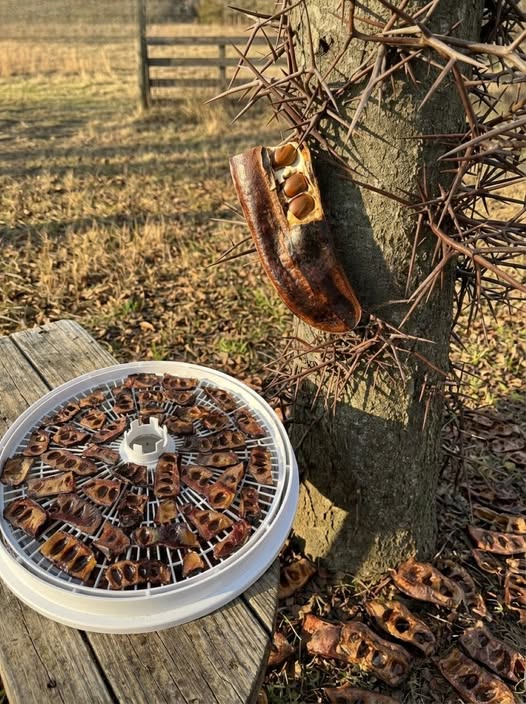
At first glance, the honey locust blends easily into parks, roadsides, and open fields, often overlooked as just another shade tree. Learning how to truly observe it, however, reveals a far richer story. Long before modern conveniences, people relied on close knowledge of the land, and the honey locust was valued not for appearance alone but for its usefulness. It provided practical support in daily life at a time when natural resources were essential rather than optional.
One of the tree’s most notable features is its long, curved seed pods, which contain a naturally sweet pulp. Communities familiar with the honey locust learned how to use this sweetness as a simple food source, enjoying it fresh or turning it into syrups and lightly fermented beverages. Even the seeds could be roasted or ground, demonstrating how people once extracted nourishment directly from their surroundings instead of depending on refined ingredients. This knowledge reflected a deeper relationship with nature, built on observation and experience.
Beyond food, the honey locust offered strength and reliability. Those who knew how to work with its wood prized it for its resistance to decay and durability outdoors. It was commonly used for fence posts, tool handles, and structural components that needed to withstand weather and time. Parts of the tree also produce a mild natural lather when mixed with water, showing how it once contributed to basic cleaning routines before commercial soaps were widely available.
Today, the honey locust continues to serve a purpose, especially in thoughtful landscaping. Its light, open canopy allows sunlight to reach plants below, supporting healthy ground growth, while its flowers and pods provide seasonal resources for wildlife and pollinators. Modern thornless varieties make it well suited for urban and residential spaces, combining beauty with function. By learning to look beyond the surface, the honey locust reminds us that even familiar trees can hold remarkable histories—and quiet lessons about resilience, ingenuity, and living in harmony with the natural world.