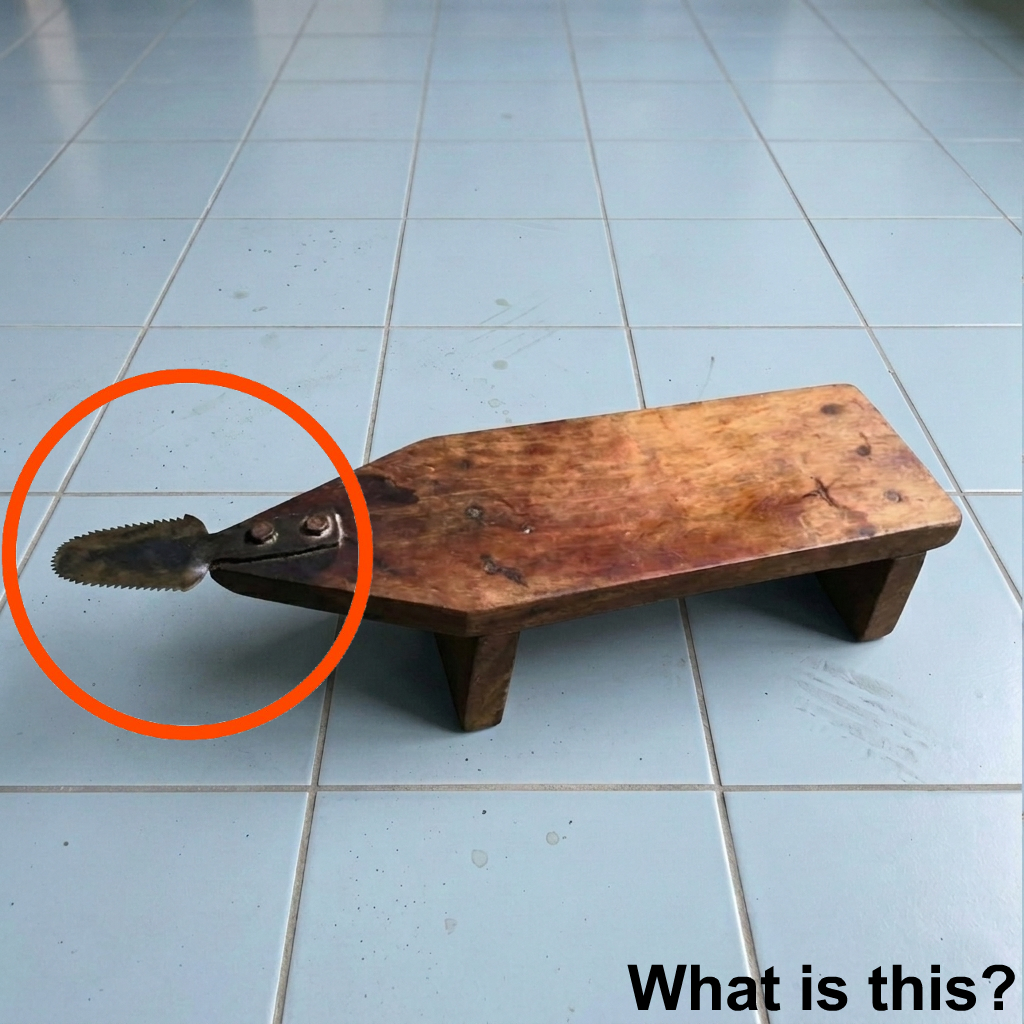
At first sight, the object can seem confusing—a low wooden seat paired with a small metal piece shaped with jagged edges. It appears too carefully made to be random, yet unfamiliar enough that its purpose isn’t immediately clear. Without context, items like this can feel unusual or even puzzling.
The explanation becomes clear when you consider where it comes from. In many tropical regions, tools are designed around local foods and daily routines. This particular item is a traditional coconut scraper, created for a task that is both common and essential in those environments.
To use it, a person sits on the wooden base and presses a halved coconut against the serrated metal edge. By rotating the coconut steadily, the white flesh is grated into fine pieces. The design may look sharp or unusual, but it allows for control, efficiency, and consistent results during food preparation.
Objects like this show how practical needs shape design. What might seem unfamiliar at first often turns out to be a well-adapted solution from another culture or time. Taking a moment to understand these items can turn confusion into appreciation for everyday tools built with purpose.