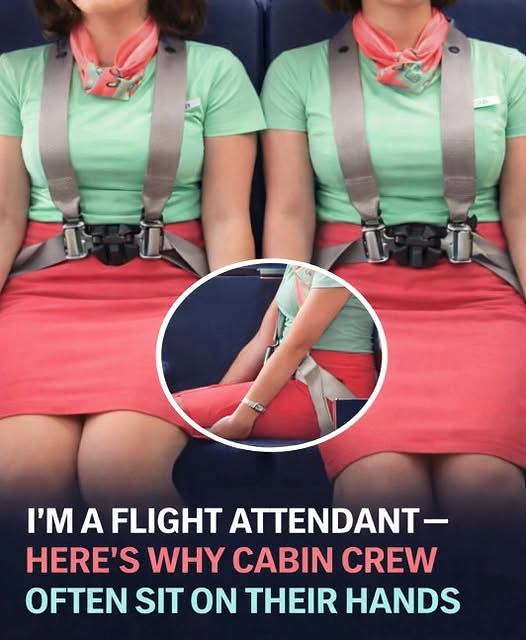
If you have ever glanced toward a jump seat during takeoff or landing, you may have noticed flight attendants sitting upright, motionless, with hands tucked neatly beneath their thighs. To passengers, the posture can look rigid or uncomfortable, easy to mistake for habit or tradition. In reality, it is a deliberate safety position known as the brace position, required during the most critical phases of flight. That stillness signals readiness, not rest, and reflects responsibilities that extend far beyond customer service.
Understanding this begins with recognizing why takeoff and landing demand extra caution. These moments involve rapid changes in speed and altitude, leaving little margin for reaction if something goes wrong. Flight attendants are trained to position their bodies to reduce injury during sudden deceleration. Placing hands under the thighs prevents instinctive arm movements that could cause harm, while keeping the torso stable and upright. This positioning allows crew members to maintain control and be physically prepared to act immediately if needed.
The posture also supports mental focus. During these phases, flight attendants actively monitor the cabin, listening for unusual sounds, observing passenger behavior, and remaining alert to any sign of trouble. Minimizing movement helps eliminate distraction and sharpens awareness. Training reinforces this discipline through repeated emergency simulations, where calm attention and quick decision-making are essential. In those moments, their role shifts from service to leadership.
This is also why instructions differ between crew and passengers. Passengers are taught to brace forward for personal protection, while flight attendants remain upright so they can stand quickly, assess conditions, and assist others. The hands-under-thighs position is just one element of comprehensive training that includes evacuation procedures, first aid, fire response, and crisis management. So when you see a flight attendant sitting very still, it is not a quirk—it is a quiet indicator of preparedness during the most vulnerable moments of flight.