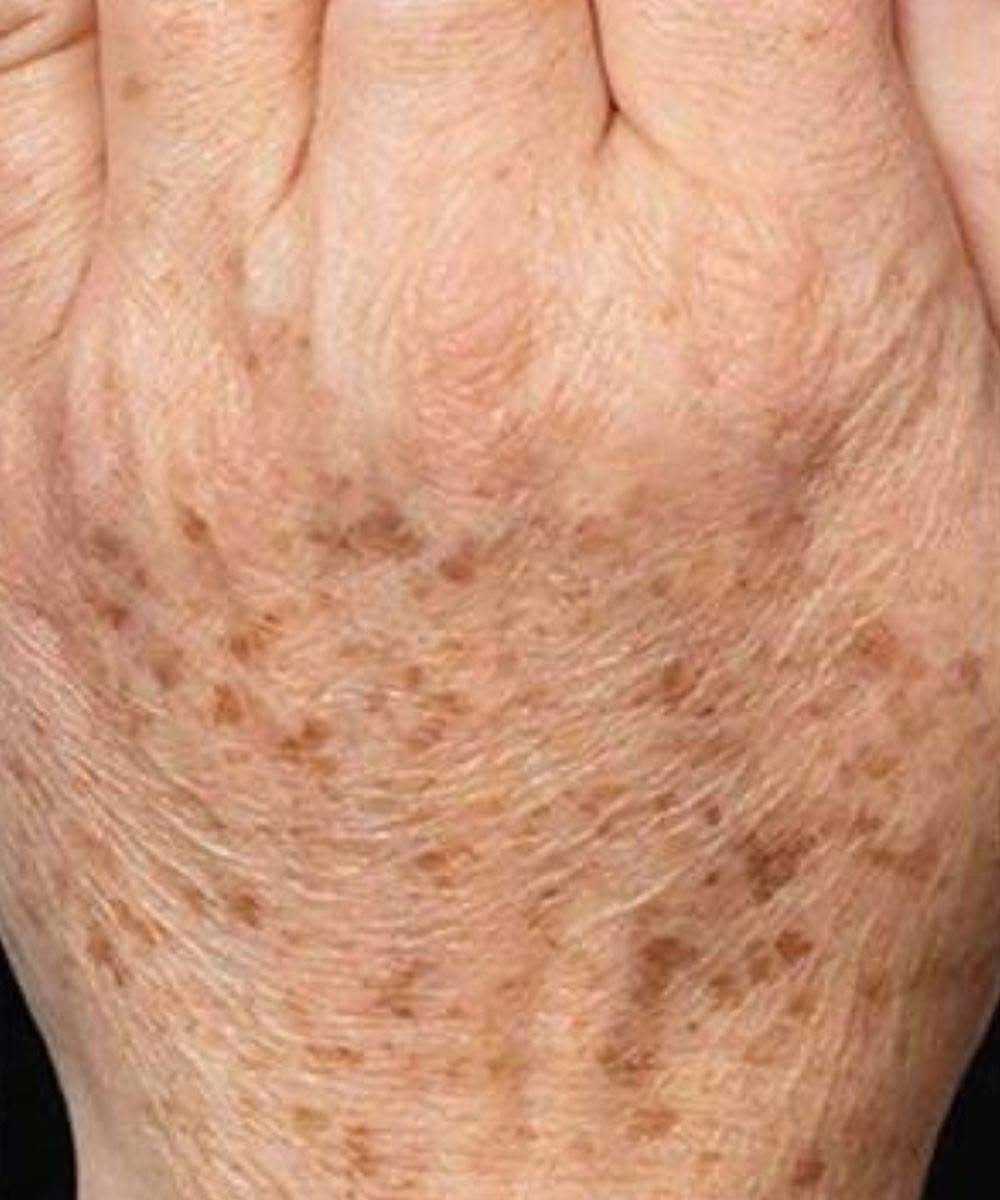
It started as a faint brown freckle on the back of Maria’s hand—easy to overlook and simpler to explain away as sun exposure or time. As weeks passed, a few more appeared, lightly scattered and unremarkable at first glance. They didn’t hurt or itch, and nothing felt urgent. Like many people, she assumed they were just part of getting older and moved on without concern.
A casual comment from a friend changed her perspective. Mentioning that skin changes can sometimes reflect shifts in health sparked curiosity rather than alarm. That evening, Maria took a few minutes to learn more. She discovered that age spots—often called liver spots—are commonly linked to sun exposure and natural aging, and are usually harmless. She also learned a practical guideline: noticeable changes in size, color, or texture are worth having checked by a professional.
Instead of worrying, Maria chose a proactive approach. She scheduled a routine dermatology appointment for reassurance and made small adjustments to her daily habits. Sunscreen became a regular part of her routine, and she started protecting her hands while gardening. She also leaned into balanced meals with antioxidant-rich foods, not as a cure, but as a way to support overall skin health.
The spots themselves didn’t disappear, but something more important shifted—her awareness. Her hands became a reminder that paying attention to subtle signals isn’t about fear; it’s about care and prevention. By noticing small changes and responding thoughtfully, Maria felt more connected to her well-being. Sometimes, the quiet cues our bodies give us are simply invitations to be a little kinder and more attentive to ourselves.