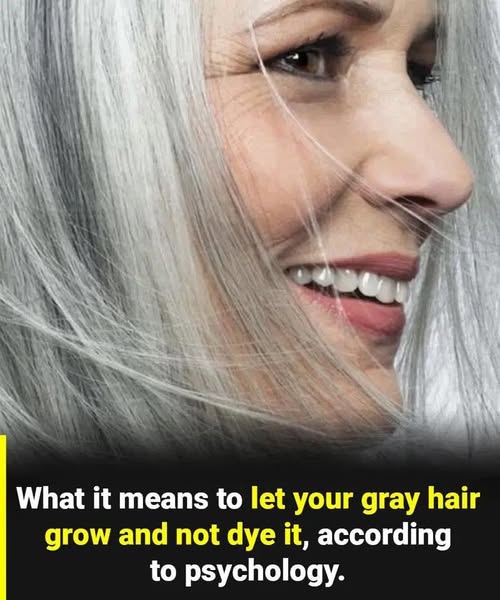
Choosing to let gray hair grow naturally instead of covering it has become increasingly common, reflecting broader changes in how people define identity and self-worth. For decades, gray hair was framed as a symbol of decline or fading relevance, reinforcing the idea that youth equaled value. Today, many view it differently—as a visible expression of honesty and confidence. What was once treated as something to conceal is now often embraced as a deliberate, empowering style choice.
From a psychological perspective, stopping hair dye marks a meaningful shift in self-perception. Hair plays a central role in how individuals present themselves to the world, so allowing gray strands to show can challenge long-held beliefs about aging. Many people discover that their unease is less about appearance and more about anticipating judgment. By accepting gray hair, they move away from external approval and toward a sense of self-worth grounded in personal alignment rather than age-based expectations.
This decision also functions as a form of self-affirmation. Opting out of dye routines can represent acceptance of one’s natural self and resistance to cultural narratives that link value exclusively to youthfulness. It reflects autonomy and emotional maturity, turning everyday grooming into a quiet statement of authenticity. For women, who have historically faced stronger pressure to hide signs of aging, the change often brings relief and liberation. For men, it can signal confidence and a refusal to measure worth solely through productivity or appearance.
Ultimately, embracing gray hair is less about aesthetics and more about emotional freedom. It reflects a healthier relationship with aging and a conscious rejection of shame or fear tied to growing older. Beyond outward appearance, this choice often nurtures resilience, self-confidence, and a deeper sense of authenticity—highlighting a personal and cultural shift toward valuing self-expression over rigid social expectations.