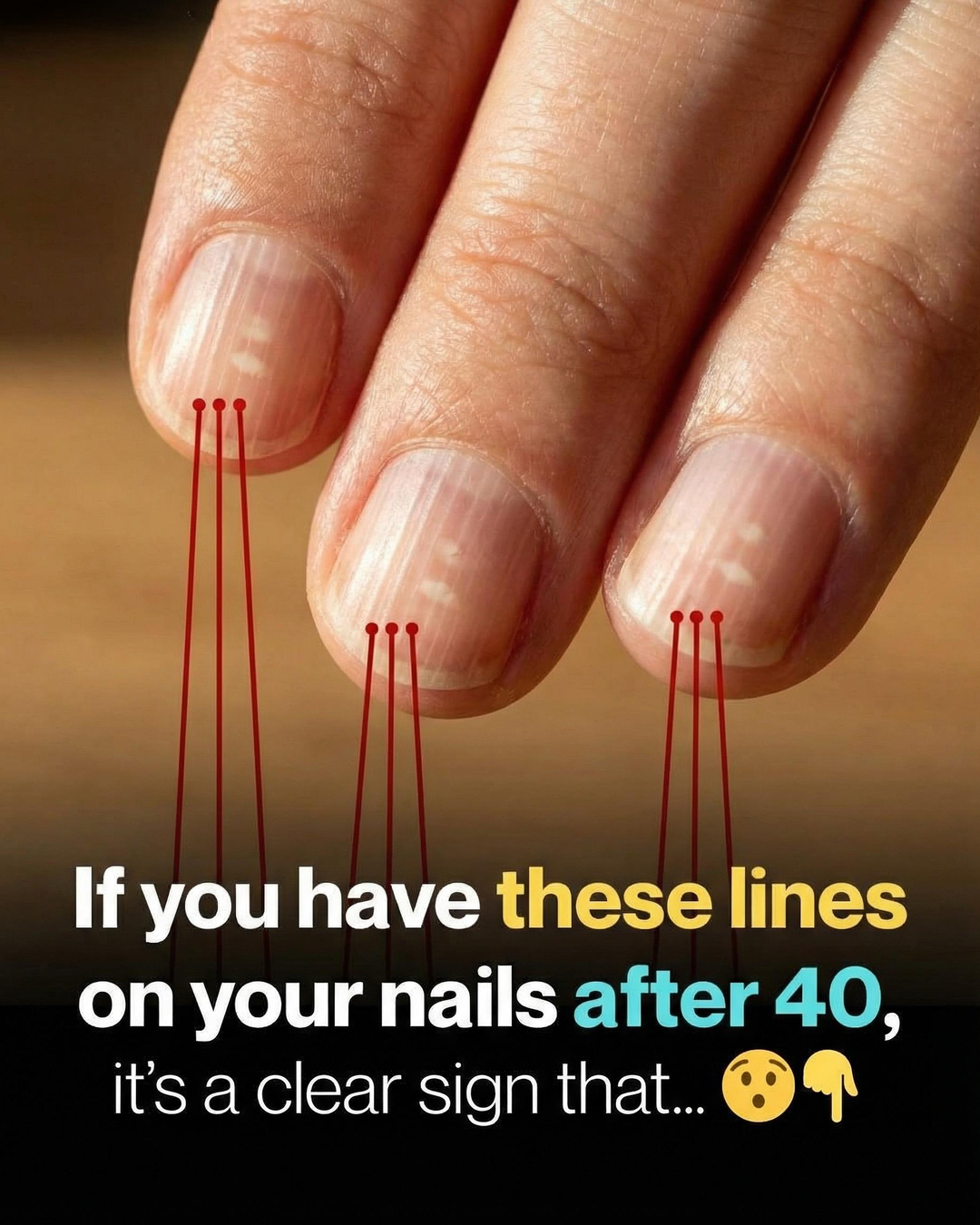
Seeing faint lines that run from the base of your fingernails to the tips can be unexpected, especially as they become more noticeable over time. For many people, these lines start to appear in midlife and gradually become more defined. In most cases, they are a normal part of aging rather than a sign of a problem. Nails, like skin and hair, change as the body does, and these subtle shifts are often reflected right at your fingertips.
These lines, commonly known as longitudinal ridges, form as nails grow. Fingernails are made of keratin, a protein produced beneath the cuticle in an area called the nail matrix. As the years pass, nail growth can become slightly less uniform. This can lead to minor variations in the layers of keratin, which show up as vertical ridges. At the same time, nails tend to lose moisture more easily with age, making texture changes more visible—especially with frequent handwashing or exposure to drying products.
Other everyday factors can influence how noticeable these ridges become. Small changes in circulation, natural hormonal shifts, or mild nutritional gaps can all affect nail texture. Because nails depend on consistent blood flow and nutrients, even subtle changes may appear on the nail surface over time. While these lines are usually harmless, sudden or dramatic changes in nail color, shape, or thickness—particularly if accompanied by other symptoms—are worth discussing with a healthcare professional.
Caring for your nails as they age is mostly about gentle, consistent habits. Regularly moisturizing your hands and cuticles can help reduce dryness and soften the appearance of ridges. Wearing gloves during cleaning tasks protects nails from harsh chemicals, while light filing can keep edges smooth. Staying well hydrated and eating a balanced diet also support healthy nail growth. Vertical nail lines are most often a natural sign of aging, but paying attention to them can still be a helpful way to stay in tune with your overall well-being.