The human body reflects millions of years of gradual adaptation shaped by movement, survival, and changing environments. Although modern life looks dramatically different from the world of early humans, many features of our anatomy still carry traces of the past. From the structure of our hands to the way we walk upright, the body tells an ongoing story of evolution and adjustment across generations. Some of these changes are obvious, while others are subtle enough to go unnoticed in everyday life.
One fascinating aspect of human evolution is how slowly physical changes occur over time. Despite major advances in technology, transportation, and lifestyle, the human body today remains remarkably similar to that of people who lived thousands of years ago. Evolution does not happen suddenly; instead, it gradually shapes traits across many generations. Occasionally, scientists and researchers observe body structures that appear less essential than they once were, offering clues about how human movement and survival needs have evolved throughout history.
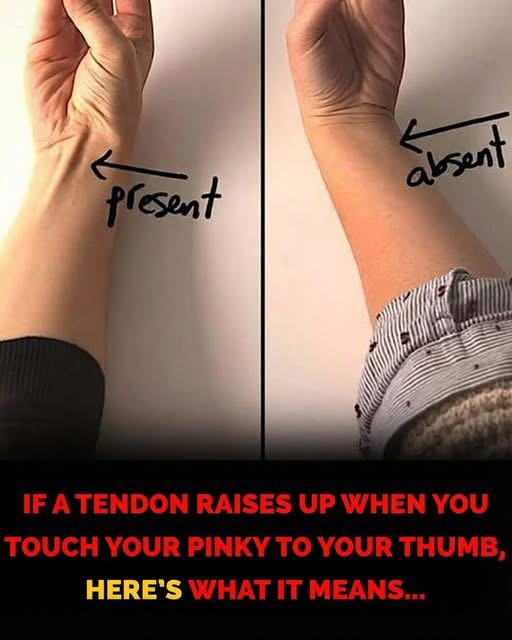
An interesting example can be found in the wrist through a structure called the palmaris longus tendon. In animals that rely heavily on climbing and forearm strength, this tendon supports grip and flexibility. As humans adapted to life that depended less on climbing and more on fine motor skills, the importance of this tendon gradually decreased. Today, a noticeable percentage of people are born without it entirely, yet most never realize the difference because it usually has little impact on everyday strength or movement.
Many people can easily check whether they have this tendon themselves. By placing the forearm palm-up, touching the thumb to the little finger, and slightly lifting the hand, a thin tendon may appear in the center of the wrist. If it is visible, the tendon is present; if not, it simply reflects a natural variation found in many healthy individuals. This harmless difference serves as a reminder that evolution is not just part of ancient history — it continues quietly within the human body, connecting modern people to both their biological past and the gradual changes still unfolding over time.