
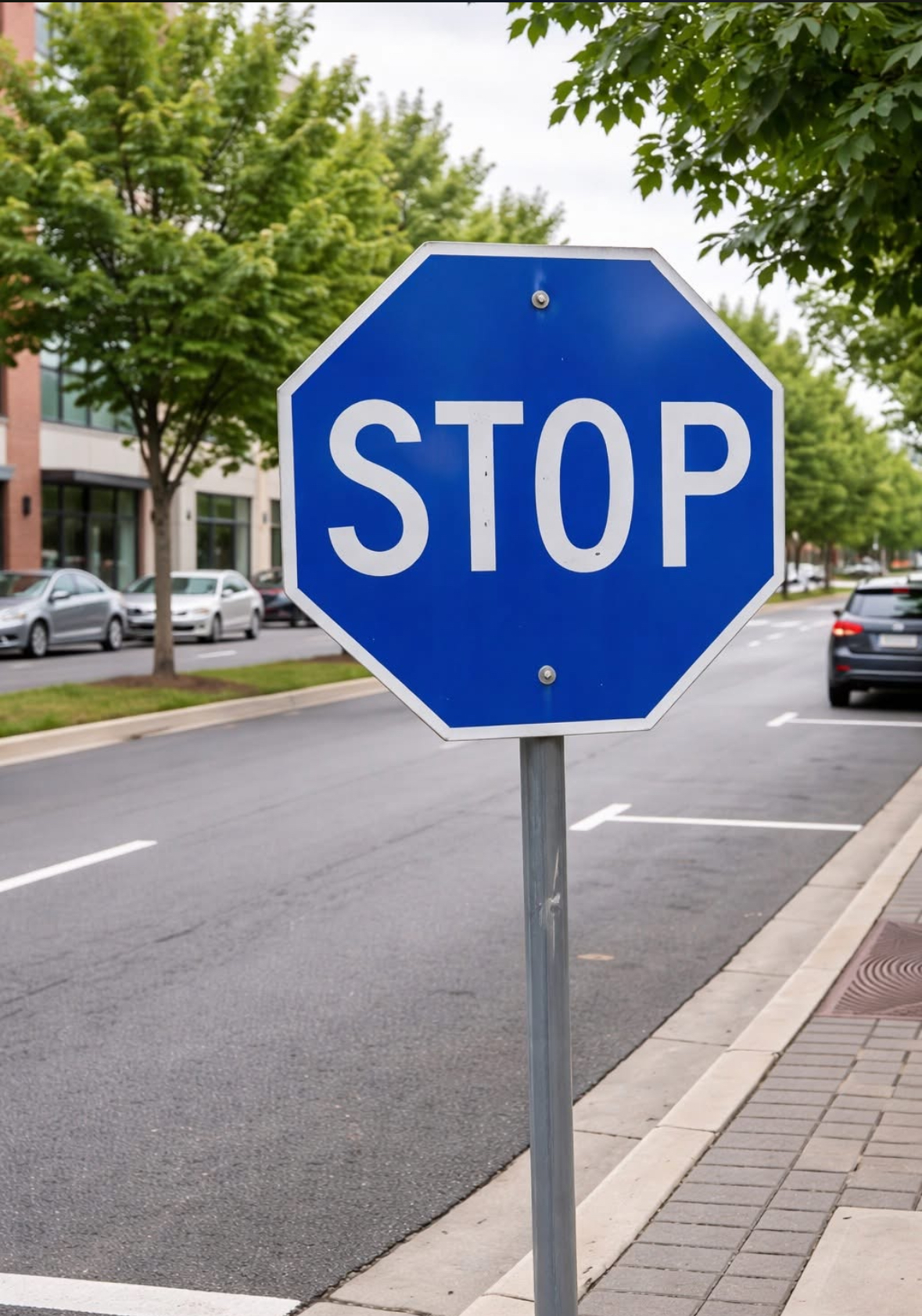
Most motorists instantly recognize the familiar red, octagonal stop sign placed at intersections across public roads. Because it has become such a universal symbol for stopping, encountering a blue stop sign can catch drivers off guard and raise questions about its purpose. Although these signs do exist, they are not part of the standard traffic system used on public streets.
In the United States, official road signs follow strict federal guidelines established to maintain consistency and safety for drivers. According to these standards, stop signs must always appear in red with white lettering. The red color was carefully selected because it stands out clearly and signals urgency, helping drivers react quickly and stop when necessary. This uniform design allows motorists to instantly recognize the instruction regardless of where they are driving.
Blue stop signs typically appear in private or controlled areas, such as residential complexes, university campuses, industrial facilities, or large parking lots. While they do not carry the same legal authority as official traffic signs on public roads, they are still installed with a practical purpose: guiding drivers, managing vehicle flow, and encouraging safer movement within private properties.
If you encounter a blue stop sign, the safest approach is simple—treat it just like a standard stop sign. Come to a complete stop, check for pedestrians or other vehicles, and proceed carefully. Even though these signs may not be legally enforceable in the same way as their red counterparts, respecting them helps maintain order and prevents unnecessary accidents in shared spaces.