
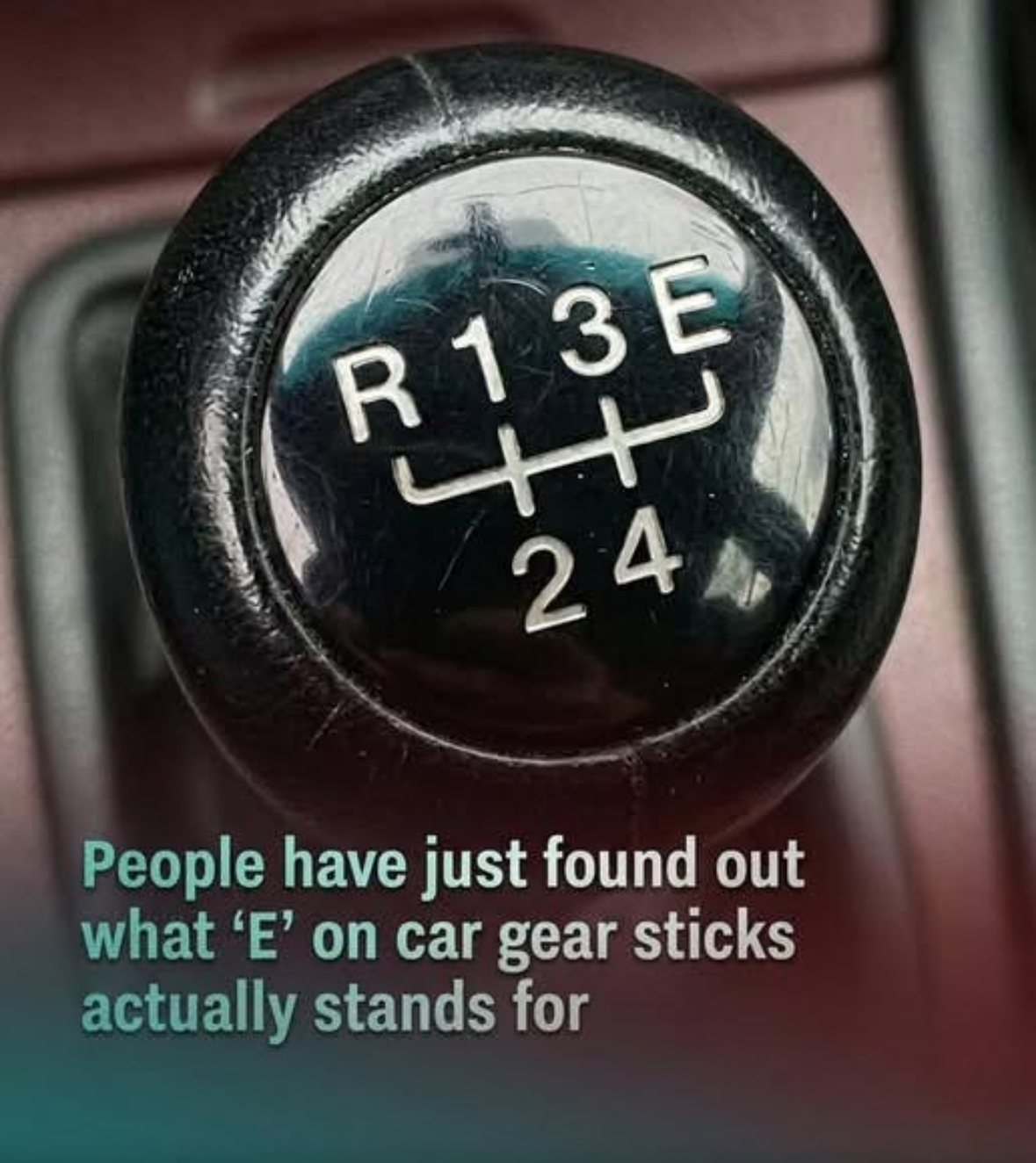
For decades, drivers have recognized the familiar layout of gear selectors. Manual transmissions typically display numbered gears along with an “R” for reverse, while automatic vehicles use letters such as P, N, D, and R to indicate Park, Neutral, Drive, and Reverse. This standardized system has shaped how people interact with cars. Yet some drivers, especially when looking at certain older vehicles, have occasionally noticed an unfamiliar letter on the gear selector — “E.” For many motorists, its meaning was not immediately obvious, prompting curiosity about what role it once played.
In several older models, the “E” represented “Economy” mode, a feature designed to support more efficient driving. When selected, this setting helped the vehicle operate in a way that prioritized lower engine revolutions and smoother cruising. By encouraging the engine to run at reduced RPM levels during steady speeds, the system aimed to lower fuel consumption and support longer drives between fuel stops. At a time when fuel efficiency was becoming an increasing concern, this mechanical solution offered drivers a practical way to manage their vehicle’s performance.
Over the years, improvements in automotive technology gradually made this dedicated setting unnecessary. Modern vehicles rely on computer-controlled engine management systems, advanced fuel injection, and optimized aerodynamics to automatically balance power and efficiency. Instead of selecting a separate economy gear, today’s cars constantly adjust engine performance in the background, helping drivers achieve better fuel use without requiring additional input.
Today, the once-common “E” marking is mostly remembered as a small detail from an earlier stage of automotive design. Many newer drivers may never encounter it, while experienced motorists might recall it as an early attempt to encourage efficient driving. Interestingly, the letter now often appears in a completely different context within the industry, frequently associated with electric mobility, reflecting how transportation continues to evolve from mechanical solutions toward modern digital systems.