
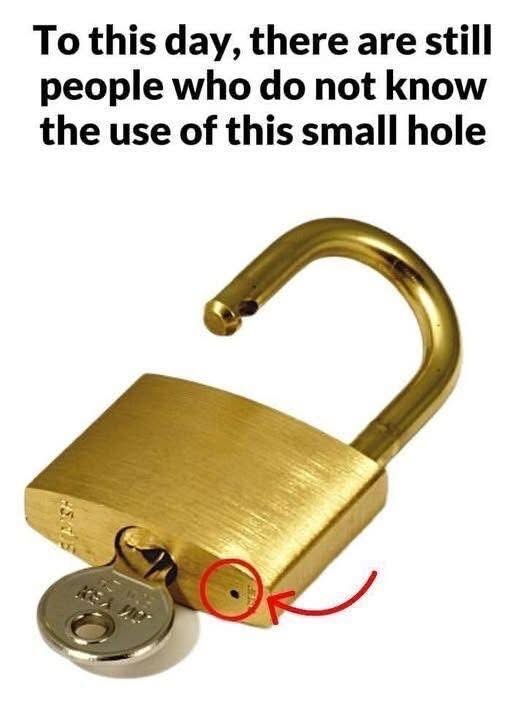
Everyday objects often hold clever design features that most people rarely notice. A simple padlock is a good example. We use it to secure gates, bicycles, toolboxes, and storage areas, usually without thinking about its construction. Yet if you examine the bottom of many padlocks, you will spot a tiny hole. It may look insignificant, but this small opening plays an important role in helping the lock function reliably over time.
One of the main reasons for this design is protection against moisture. Padlocks are frequently exposed to outdoor conditions such as rain, snow, and humidity. When water enters the lock’s internal chamber, it can lead to rust and corrosion that may damage the mechanism. The small hole acts as a drainage point, allowing trapped water to escape so the internal components remain cleaner and less likely to jam.
Another useful purpose of this feature is maintenance. Over time, dust, debris, or cold temperatures can cause a lock to feel stiff or difficult to turn. The small opening allows a person to apply a tiny amount of lubricant—such as graphite powder or lock oil—directly into the internal parts of the lock. With proper lubrication, the pins and springs can move more smoothly again, helping extend the life of the lock without needing to replace it.
This thoughtful detail reflects a broader pattern in everyday design. Many common tools and objects include small features that quietly improve their usefulness, from the shape of certain screwdriver handles that allow extra grip with a wrench to subtle indicators in vehicles that help drivers find the fuel door quickly. Once you begin noticing these details, it becomes clear that even the simplest items often contain smart solutions created to make daily life a little easier.