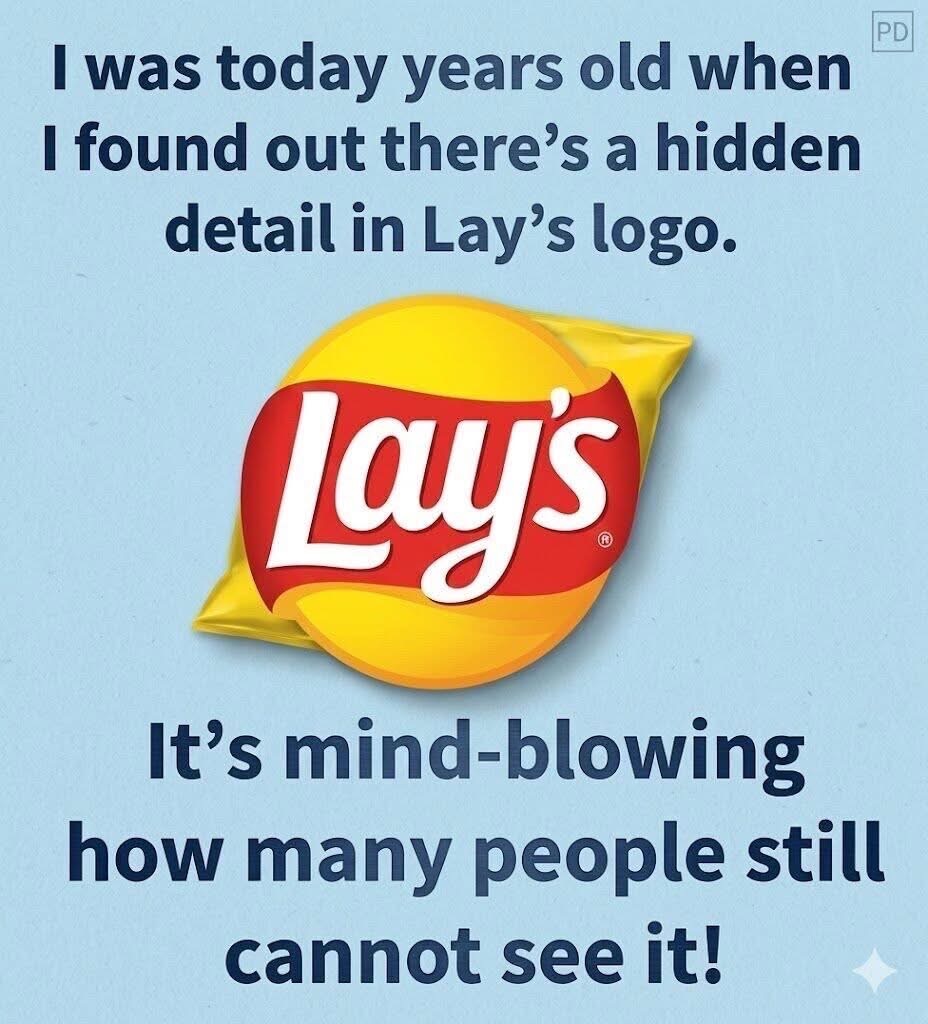
At first glance, the Lay’s logo appears clean and straightforward: a bright yellow circle crossed by a flowing red band. Yet a closer look reveals a thoughtful composition designed to feel instantly recognizable. The curved red shape is not just decorative—it guides the eye across the logo, creating movement and balance. This gentle visual flow helps the design feel dynamic while remaining simple, allowing it to stand out without overwhelming the viewer.
That sweeping red element also reflects a broader design continuity. Over time, branding within the same product family has often used similar curves and motion to communicate energy and approachability. In this case, the ribbon-like shape carries a sense of familiarity, reinforcing a connection to a wider visual identity without needing to state it directly. The result is a logo that feels both modern and rooted in established design language, creating trust through subtle consistency.
The yellow circle behind it adds another layer of meaning. Its warm tone evokes brightness and positivity, while its rounded form mirrors the shape of the product itself. This connection between packaging and what’s inside helps create a cohesive impression. Rounded shapes are also commonly associated with comfort and friendliness, which aligns naturally with everyday snack products. Together, the circle and the curved band create a balanced composition that is easy to recognize from a distance.
Ultimately, the strength of this design lies in its simplicity and continuity. Rather than relying on complex visuals, it uses familiar shapes and colors to build a lasting impression. Over time, these elements become part of how people recognize and relate to the brand. What may seem like a basic logo is actually a carefully refined visual system—one that combines clarity, consistency, and subtle storytelling to remain memorable across generations.