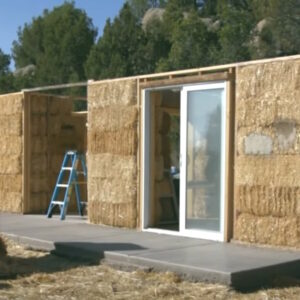
Planning ahead for their children’s future, a Colorado couple decided to invest not in a traditional house, but in an idea rooted in simplicity and self-reliance. Years earlier, they purchased a small plot of land with the intention of building a home their daughter could one day grow into. When the time came, they turned that vision into reality by designing a compact, off-grid dwelling that balanced comfort, function, and long-term value.
The how-to process began with choosing natural, affordable materials. The home was built on a modest concrete foundation and formed using straw bales sealed with cob—a natural blend of clay, sand, straw, and water known for its durability and fire-resistant qualities. The interior layout was carefully planned, dividing the space into two larger rooms with a smaller central area that houses essential utilities, creating a practical flow without wasting square footage.

To live independently from public utilities, the house relies entirely on renewable solutions. Solar panels provide electricity for lighting and basic appliances, while hauled water is managed efficiently with a small electric pump. Thick straw bale walls help regulate indoor temperature year-round, supported by a compact ceramic heater for colder months. Even leisure was considered, with a handmade hot tub heated by a simple wood-burning system.
By sourcing most materials locally and keeping the design intentional, the entire project was completed quickly and on a tight budget. Thoughtful details—like built-in storage steps, natural wood finishes, and creative glass accents—add personality without excess. This project shows how careful planning, sustainable choices, and hands-on effort can create a warm, inviting home that’s both practical today and meaningful for the future.
