
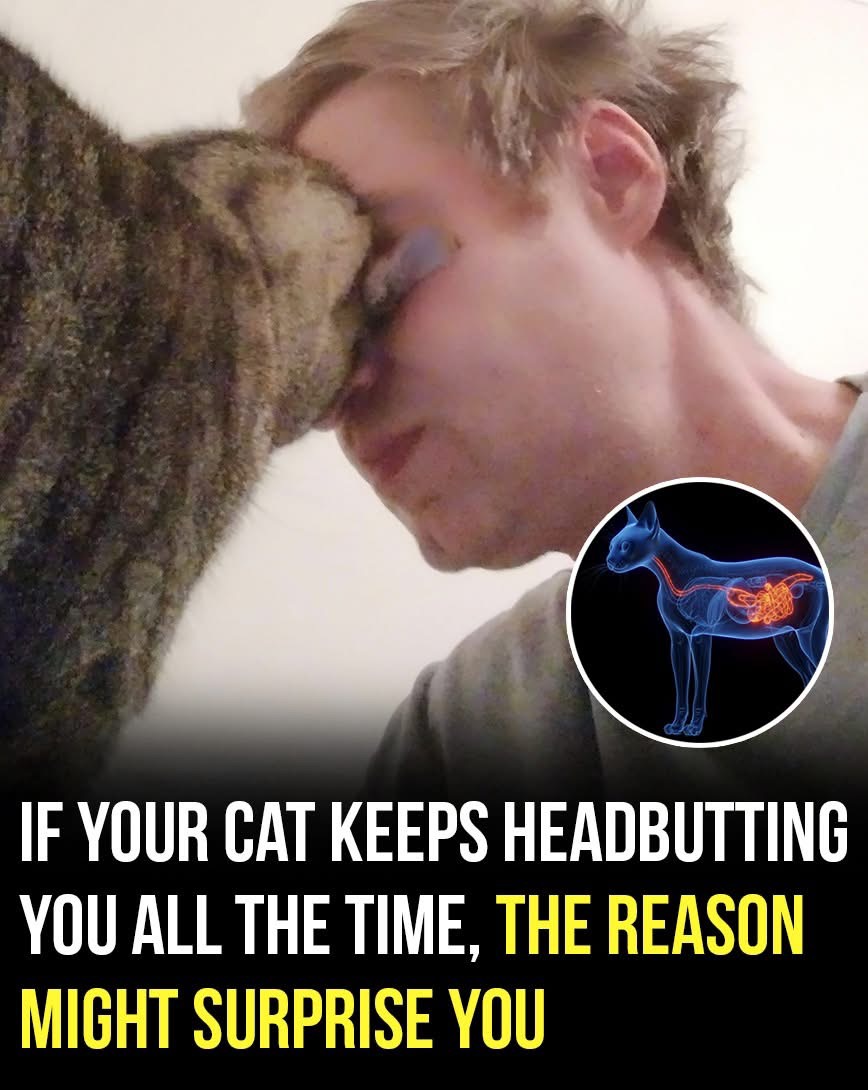
If your cat softly presses its forehead against your hand, leg, or even your face, that small gesture carries more meaning than it may appear. Far from random behavior, this tender nudge is often a sign of comfort and connection. In the quiet language of cats, a head bump can signal familiarity and trust. What feels like a cute habit is actually a thoughtful form of communication rooted in instinct.
This behavior is commonly known as “bunting.” Cats have scent glands located around their cheeks and forehead, and when they rub against a person or object, they release subtle scent markers. These markers are not noticeable to us, but they help cats recognize what belongs in their safe space. By pressing their head against you, they are essentially including you in their environment — identifying you as someone familiar and reassuring.
In nature, similar gestures are observed among larger wild cats. Face rubbing and gentle contact help create a shared group scent, reinforcing bonds within the pride. Domestic cats carry that instinct forward, even in the comfort of a home. When your pet leans in for a soft nuzzle, it reflects a sense of belonging. It’s a quiet way of saying you are part of their trusted circle.
Of course, not every cat expresses affection in the same way. Some prefer sitting nearby, offering slow blinks, or purring softly from a comfortable distance. But when a cat willingly lowers its guard and initiates gentle contact, it’s a meaningful moment. Responding with a calm voice or a light stroke strengthens that connection. In the end, that simple head bump is less about the movement itself and more about the trust behind it.