
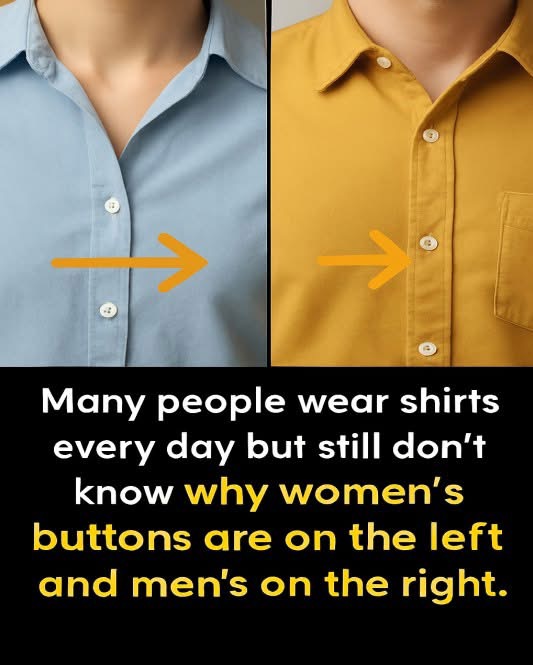
At first glance, the placement of buttons on shirts may seem insignificant. Yet a closer look reveals a longstanding distinction: most women’s shirts fasten on the left side, while men’s shirts close on the right. This subtle design choice dates back several centuries and reflects social customs that shaped clothing construction in earlier eras. What appears to be a minor tailoring detail is actually rooted in historical practicality.
During the 18th and 19th centuries, many affluent women wore garments that were intricate and layered, often requiring assistance to put on properly. Domestic helpers—most commonly right-handed—found it easier to fasten clothing when buttons were positioned on the left side of the wearer. Over time, this arrangement became standardized in women’s fashion. Even as lifestyles evolved and self-dressing became the norm, manufacturers continued producing garments according to this established pattern.
Men’s clothing followed a different path influenced by daily function. Historically, many men carried tools or weapons, such as swords, typically worn on the left side to be drawn with the right hand. Garments that fastened on the right were less likely to interfere with movement. As military and structured attire influenced civilian fashion, right-side button placement became widely associated with men’s shirts and jackets. What began as a functional adaptation gradually became a convention.
Today, most people rarely pause to consider why their shirts fasten in a particular direction. Yet this enduring detail highlights how fashion preserves echoes of social habits long after their original purpose has faded. A simple row of buttons quietly reflects centuries of tradition, reminding us that even everyday clothing carries stories shaped by history and practicality.