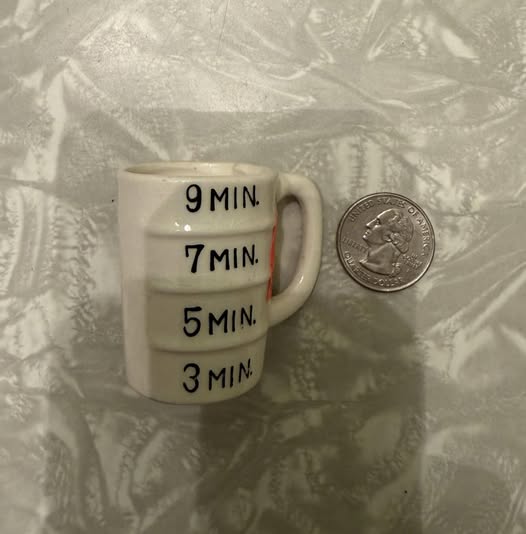
Vintage kitchen gadgets often draw attention because they combine simplicity with smart design, and some of their features can seem puzzling at first. One notable example is the Howard Electric Egg Boiler, accompanied by a small ceramic cup marked with numbers. While it may resemble a decorative item, this cup was actually an essential part of a carefully designed system intended to make cooking eggs easier and more precise.
The numbers printed on the cup—such as 3, 5, 7, and 9—were not related to time, as many might assume. Instead, they represented specific water levels. Each level corresponded to a different egg texture, from soft and slightly runny to firm and fully cooked. The method was simple: fill the cup to the chosen marking, pour the water into the appliance, and let it operate without the need for constant attention or manual timing.
What made this device particularly practical was its automatic stopping mechanism. As the water inside heated and gradually evaporated, the machine would turn off once the correct amount had been used. This natural process signaled that the eggs had reached the desired consistency. It eliminated guesswork and made the cooking process reliable, especially for busy mornings or compact living spaces.
Today, the Howard Egg Boiler is appreciated not only for its functionality but also for its thoughtful design. It reflects an era when everyday tools were created with efficiency and purpose in mind. Whether used in the kitchen or displayed as part of a vintage collection, it serves as a reminder that even the simplest routines can benefit from smart, well-crafted solutions.