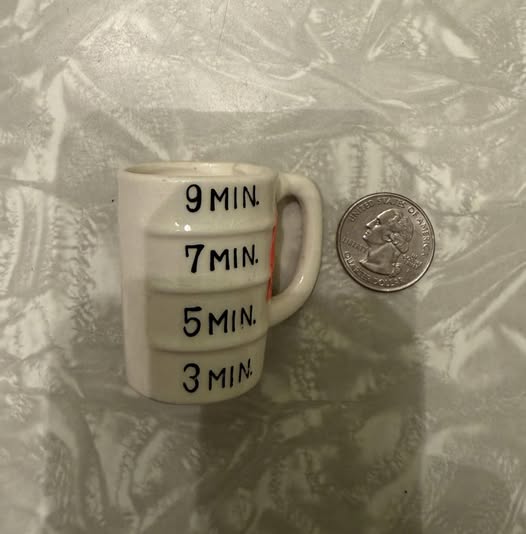
Vintage kitchen tools often spark curiosity, especially when their purpose isn’t immediately obvious. One such conversation piece is the Howard Electric Egg Boiler, frequently discovered at estate sales or tucked away on thrift store shelves. Accompanying it is a petite ceramic cup that resembles a miniature coffee mug, printed with numbers that seem puzzling at first glance. Many people mistake it for a novelty item or decorative accessory, unaware that it was actually the key to making perfectly cooked eggs with minimal effort.
The secret lies in the numbers printed on the cup—typically 3, 5, 7, and 9. Rather than indicating minutes, these markings represent water levels. To use it, you simply fill the cup with water up to the line that matches your preferred egg texture, then pour the measured water into the base of the boiler. As the appliance heats, it gently steams the egg. The brilliance of the design is its simplicity: once the water fully evaporates, the cooking cycle ends automatically, signaling that the egg is ready.
This straightforward system eliminated the need for constant stovetop monitoring or precise timing. It offered a practical solution for busy mornings, compact kitchens, or dorm living—spaces where convenience matters. Cleanup was equally uncomplicated, requiring little more than a quick rinse of the cup and a wipe of the heating base. The entire process reflects a time when household appliances were engineered to solve everyday tasks with mechanical logic rather than digital complexity.
Today, collectors and vintage enthusiasts appreciate the Howard Egg Boiler not just for its function but for its thoughtful design. Many units remain operational decades later, and the ceramic measuring cup adds visual charm when displayed alongside other mid-century appliances. More than a quirky gadget, it represents an era when even the simple act of cooking an egg inspired practical innovation and enduring craftsmanship.