I was seventeen when the future I had quietly imagined dissolved without warning. There was no dramatic argument, no final scene worthy of a movie. Just a hesitant look, a whispered confession — “I can’t do this” — and then absence. Suddenly I was alone, trying to convince everyone around me that I was strong enough to handle what was ahead. At night, though, the silence felt heavier. With one hand resting over my stomach, I realized bravery often looks like pretending you aren’t afraid.
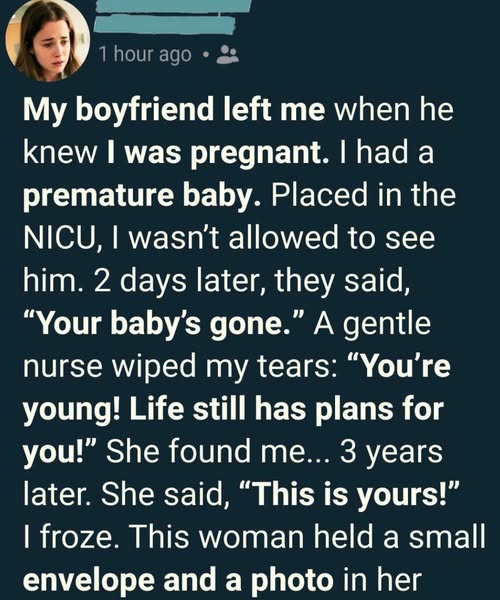
My son arrived earlier than expected. The hospital lights were bright, voices urgent, and medical terms blurred together in ways I couldn’t fully process. Words like “premature” and “intensive care” echoed through the room. I never heard his cry. Within days, a doctor gently explained that despite every effort, his tiny body could not continue. The grief that followed was quiet and disorienting. I left the hospital with empty arms and a heart that felt suspended between disbelief and sorrow. A nurse sat beside me that day and offered a simple truth: this would not be the end of my story. I couldn’t see how that could be possible, but her steadiness stayed with me.
Time passed slowly. I worked wherever I could, moved carefully through routines, and tried to rebuild a sense of direction. Years later, I unexpectedly met that same nurse again. She handed me an envelope containing information about a scholarship she had created for young mothers who had experienced loss. Inside was also a photograph of me from that hospital room — not as a reminder of pain, but as proof of resilience. “Strength deserves to be remembered,” she said. That moment shifted something inside me. For the first time, I felt possibility alongside grief.
The scholarship opened a door I hadn’t considered. I returned to school and eventually found myself working in a hospital environment, offering support to families facing uncertainty. My son’s brief life did not vanish into nothingness; it quietly shaped the path I walk today. The photograph now hangs in my office, not as a symbol of tragedy, but as evidence that hardship can be transformed into purpose. Compassion does not erase loss, but it can guide it toward meaning — and sometimes, that meaning becomes the beginning of a new chapter.