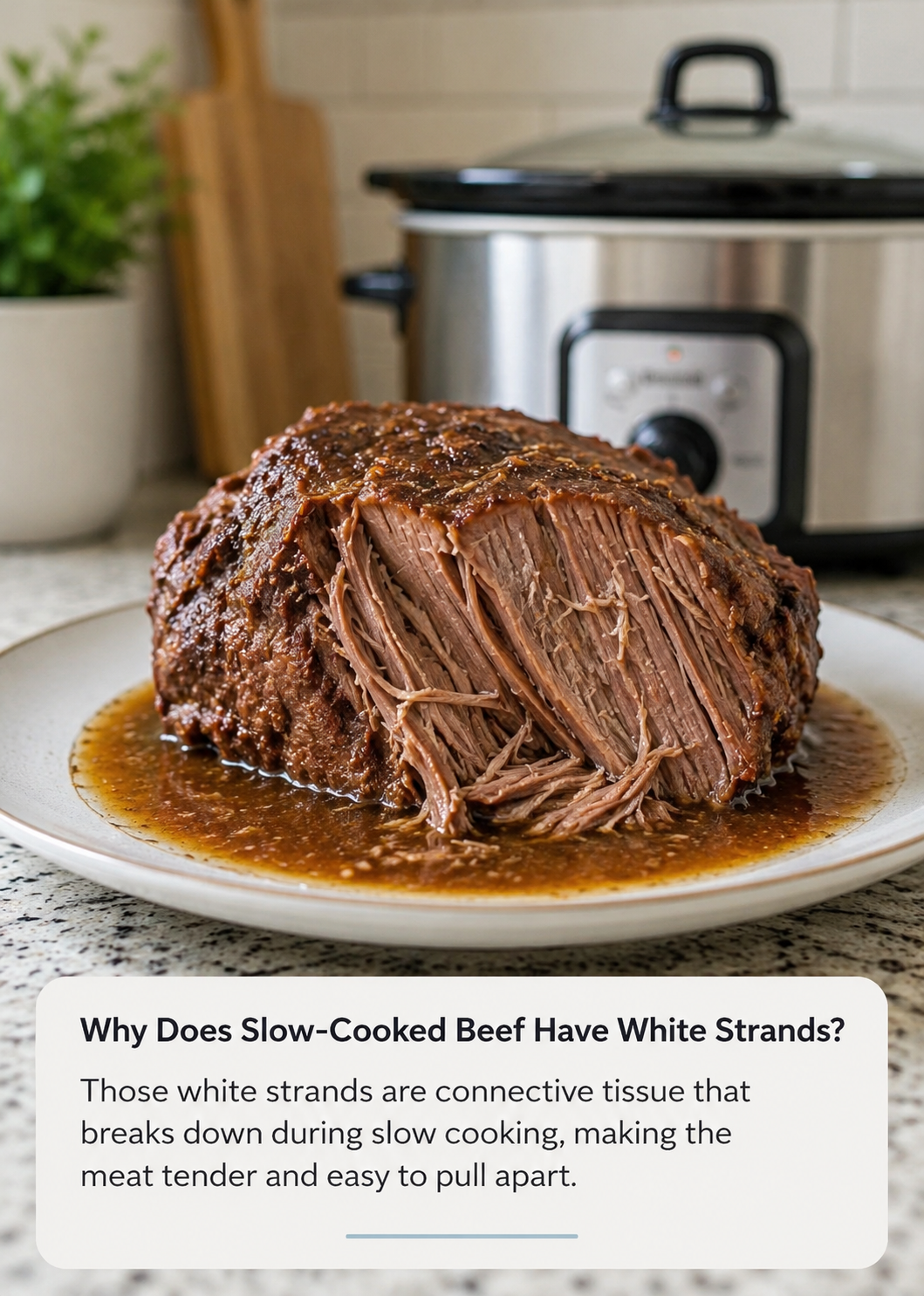
Cooking can occasionally produce textures or appearances that seem unexpected at first glance, especially during long slow-cooking methods. Many people preparing beef roasts expect the meat to appear smooth and uniform after several hours of cooking. When thin white strands become visible inside the meat, it can briefly seem unusual or concerning. In most cases, however, these changes are a completely natural part of how beef transforms during the cooking process and are closely connected to the structure of the meat itself.
Beef contains muscle fibers, fat, moisture, and connective tissue that all respond differently to heat. One important component is collagen, a protein that helps support and hold muscle tissue together. In raw meat, collagen contributes to firmness and toughness. As beef cooks slowly over low heat, this connective tissue gradually softens and begins breaking down. During this transformation, some of the connective fibers may become more visible, appearing as pale or string-like strands throughout the meat.
Slow cooking methods are especially known for creating tender textures because they allow the connective tissue to relax gradually instead of tightening quickly under intense heat. This steady cooking environment helps tougher cuts of beef become soft enough to pull apart easily with a fork. The visible strands are often a sign that the collagen and connective tissue have broken down properly, contributing to the rich texture and tenderness commonly associated with slow-cooked meals.
When beef is cooked thoroughly at safe temperatures for the recommended amount of time, these natural texture changes are generally expected and not a sign of contamination. Understanding how heat affects meat structure can make cooking feel less confusing and more enjoyable, especially for home cooks experimenting with slower preparation methods. What may initially appear unusual is often simply part of the process that gives slow-cooked dishes their familiar flavor, softness, and satisfying texture.