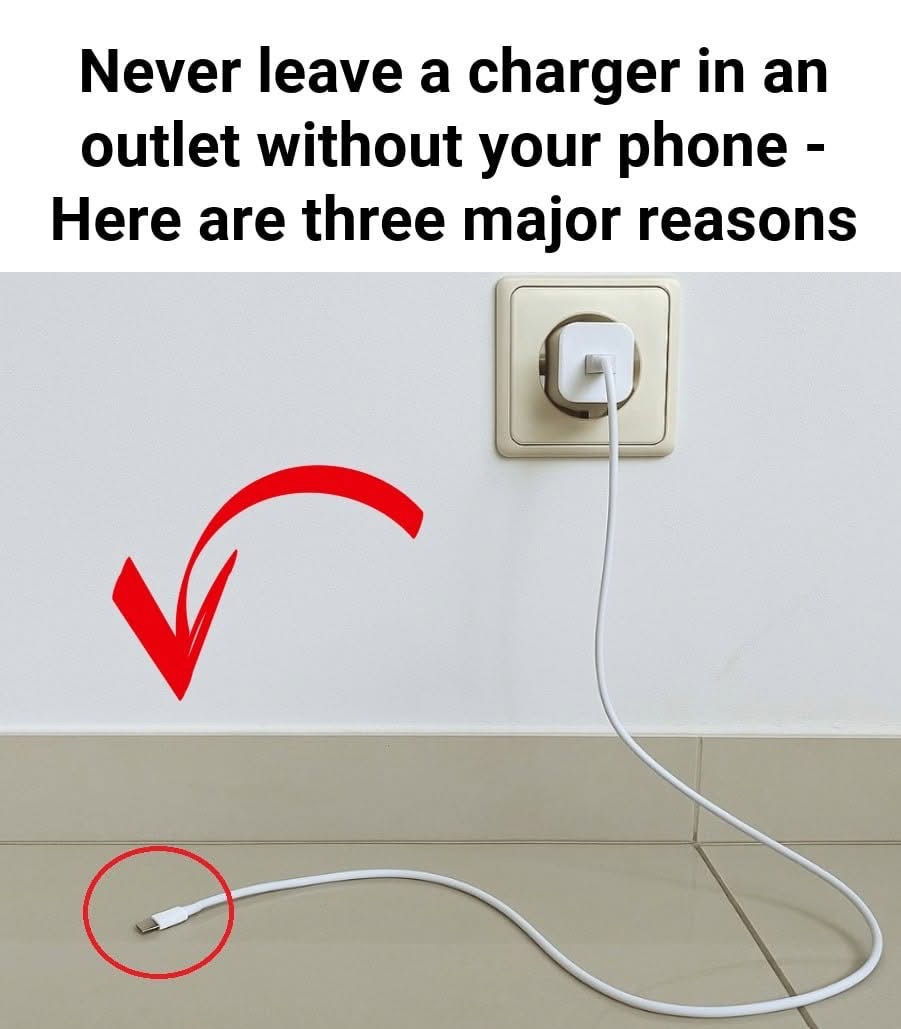
Phone chargers have become such a normal part of daily life that many people rarely think about them after plugging them into the wall. However, even when a charger is not actively connected to a device, it can still draw a small amount of electricity. Individually, the energy use is usually minimal, but the combined effect of multiple chargers left plugged in throughout a home can gradually contribute to unnecessary energy consumption over time. As households continue adding more electronic devices, small habits like unplugging unused accessories can make a noticeable difference in efficiency.
Safety is another reason many experts recommend using chargers responsibly. Most modern chargers sold by reputable manufacturers are designed to meet strict electrical safety standards, which helps reduce risks during normal use. However, damaged cables, counterfeit products, or low-quality chargers may not provide the same level of protection. Chargers that become overheated—especially when covered by blankets, clothing, or other materials—can create avoidable safety concerns. Keeping chargers in open, ventilated areas and regularly checking them for wear is considered a good everyday safety practice.
Beyond household safety, reducing unnecessary electricity use also supports broader energy-saving efforts. While many smartphone chargers use only a very small amount of standby power, older charging equipment and larger battery chargers for tools or appliances may consume more energy than people expect. Identifying electronics that continue drawing power while idle can help lower overall electricity use and reduce waste. Simple adjustments, such as unplugging unused chargers or using power strips that can be switched off easily, are practical ways to improve energy efficiency at home.
Technology has made modern life more convenient, but small habits still play an important role in maintaining safe and efficient households. Paying attention to how chargers are stored, used, and left connected can help reduce clutter, improve safety awareness, and support more mindful energy use. While a single charger may not dramatically affect an electricity bill, consistent habits across multiple devices can add up over time. In many cases, small everyday decisions become the foundation of smarter and more sustainable living.