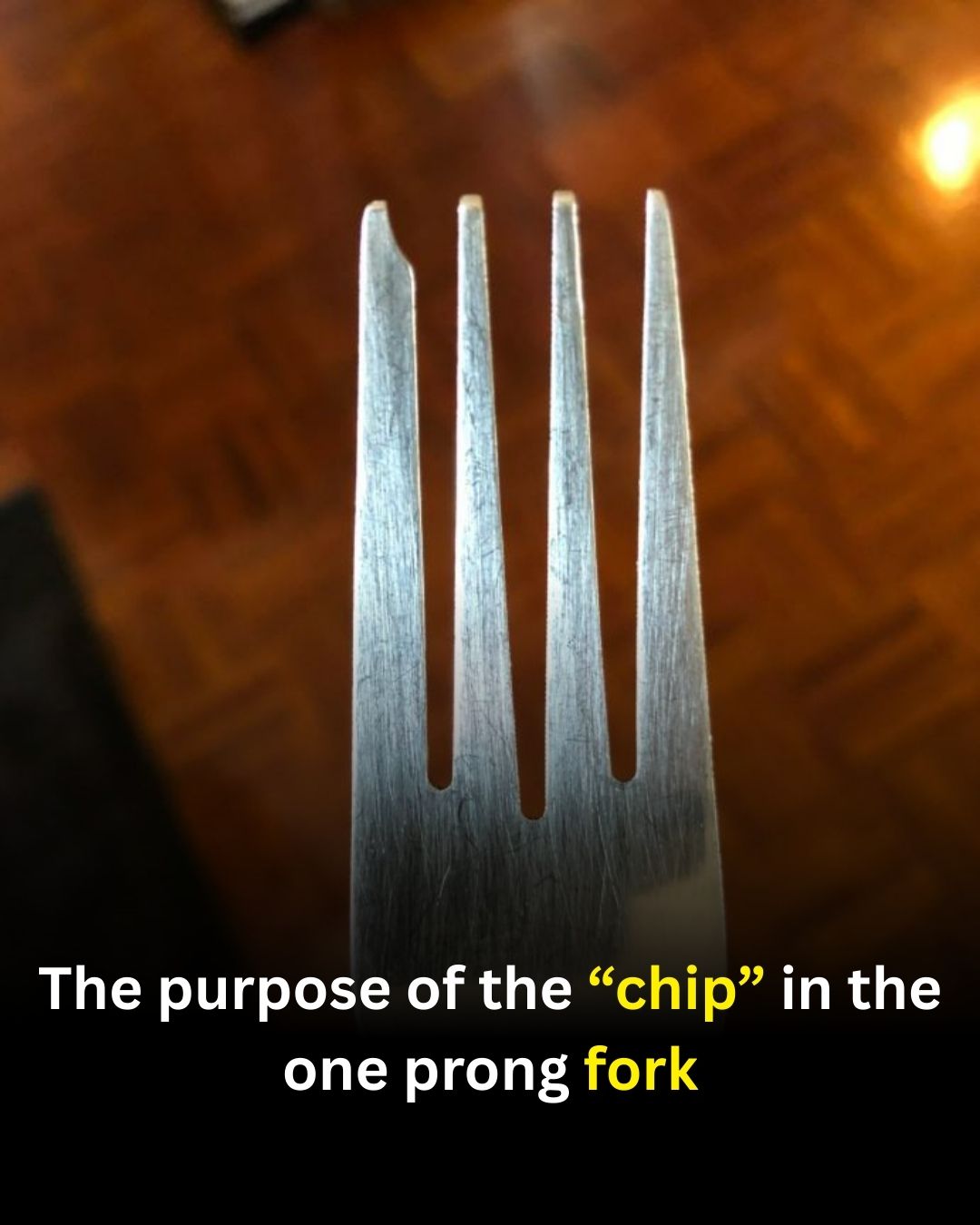
You may have come across a fork where one prong looks wider, flatter, or shorter than the rest and assumed it was worn down or imperfect. When the same feature appears across multiple utensils, however, it’s usually intentional. That subtle variation isn’t damage — it’s a design choice meant to add function without drawing attention to itself.
This type of utensil is often referred to as a cutting fork. One tine is shaped broader and less pointed so it can help press through softer foods such as cooked vegetables, pasta, or flaky fish. It’s not designed to replace a knife, but to make everyday eating more efficient. The remaining prongs stay narrow and sharp enough to work like a standard fork.
Understanding why this design exists requires a brief look at the past. Cutting forks were more common in the mid-20th century, when households favored practical, multi-use items. A fork that could both hold and gently divide food reduced the need for extra utensils at casual meals, aligning with a simpler, more streamlined approach to dining.
The takeaway is simple: that unusual prong is likely there on purpose. It’s a reminder that many everyday objects include thoughtful details that go unnoticed. What appears odd at first glance often reflects a clever solution quietly built into something familiar.