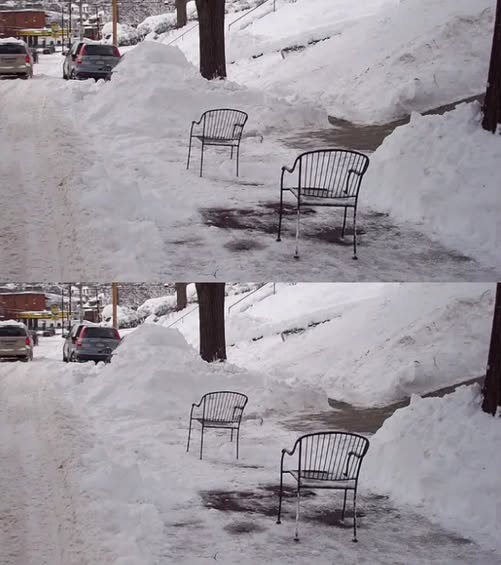
What may look like discarded furniture on a snowy curb is often something more intentional: a quiet signal of effort and respect. In winter, when clearing a parking spot can take real time and energy, placing a chair there is a way of saying, “This space was earned.” It isn’t enforced by law, but by shared understanding, shaped by cold mornings and sore backs.
To understand why this custom works, it helps to recognize the mutual trust behind it. Neighbors honor the chair not because they must, but because they’ve been there themselves. They know the labor involved, and they choose courtesy over convenience. In that moment, community standards matter more than posted regulations.
This shared mindset often leads to small, unexpected gestures. A worn chair might later be replaced with a sturdier one, offered as a thank-you. A newcomer who respects the signal may gain more than a parking space — perhaps a friendly wave, a brief conversation, or a sense of belonging that wasn’t there before.
The simple lesson is this: pay attention to what’s being communicated without words. When you notice a chair guarding a spot, you’re seeing more than an object — you’re seeing cooperation in action. Stepping around it isn’t just polite; it’s a way of quietly taking part in the rhythm of neighborhood life.