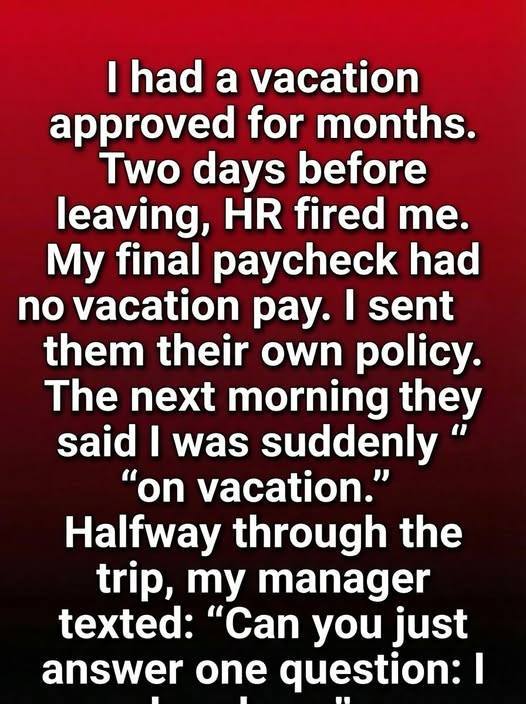
After months of nonstop work, having my vacation approved felt like a finish line. Everything was set—travel booked, responsibilities handed off, calendar cleared. Then, just two days before I was supposed to leave, I was called into an HR meeting and let go without warning. The conversation was brief and impersonal, and I was escorted out before I could fully absorb what had happened. The shock was quickly followed by a practical concern: my final paycheck didn’t include the vacation time I had already earned and received approval for.
According to company policy, that time should have been paid out, so I reached out to HR with a clear, professional message asking for clarification. The response missed the point entirely, stating that I was “on vacation,” despite the fact that my employment had already ended. Rather than spend my energy arguing, I made a choice to proceed with the trip. While away, I received messages from my former manager asking for help with work-related questions, framed casually and apologetically, as if nothing had changed.
Instead of responding emotionally, I paused. I drafted several replies and erased them before sending a short, composed message explaining that since my role had ended, I wasn’t able to assist. The reply I received was brief and uncomfortable, and that was the end of it. In that moment, something shifted. For the first time since the termination, I felt calm. I put my phone away and allowed myself to actually enjoy the break I had planned.
That time away became more than a vacation—it became perspective. Distance made it clear that staying would have meant continuing to accept less than I deserved. When I returned, I didn’t rush into the next opportunity. I focused on finding a workplace that respected boundaries and honored its own policies. The experience reinforced a valuable truth: closure doesn’t always come from confrontation. Sometimes it comes from stepping back, resting, and recognizing your own worth without needing validation from those who failed to see it.