
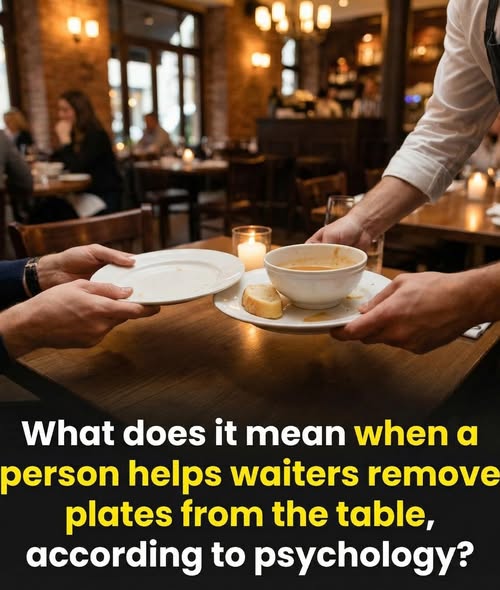
In the steady rhythm of a busy restaurant—dishes clinking, conversations overlapping, servers navigating between tables—minor actions can carry unexpected meaning. Occasionally, a guest gathers empty plates and passes them to a server with a brief smile. The gesture is simple and often unnoticed by others, yet it reflects an awareness that dining out is a shared environment. While most people focus on their meals and company, those who offer small assistance demonstrate attentiveness to the broader setting around them.
Behavioral experts often describe such actions as prosocial—voluntary efforts intended to support others without seeking recognition. Guests who lend a hand may understand the pace and coordination required in hospitality work. Some have firsthand experience in service roles; others simply appreciate the effort involved. Handing over plates or clearing space is not about rushing the meal; it is a subtle acknowledgment that everyone contributes to the overall atmosphere.
This type of thoughtful behavior also connects to emotional intelligence. Individuals who are comfortable in social settings tend to notice nonverbal cues—a server balancing multiple dishes, maneuvering through tight spaces, or preparing to reset a table. When help is offered naturally and without fanfare, it feels collaborative rather than intrusive. Studies in social psychology suggest that people guided by internal values, such as respect and empathy, are more likely to act considerately without expecting praise.
At the same time, choosing not to assist does not automatically imply indifference. Cultural expectations and personal boundaries differ widely. What matters most is the spirit behind the action. When gestures are rooted in genuine consideration, they can contribute to a positive dining experience for both staff and guests. In fast-paced public spaces, small acts of cooperation—quiet and unassuming—often leave the most lasting impression.