
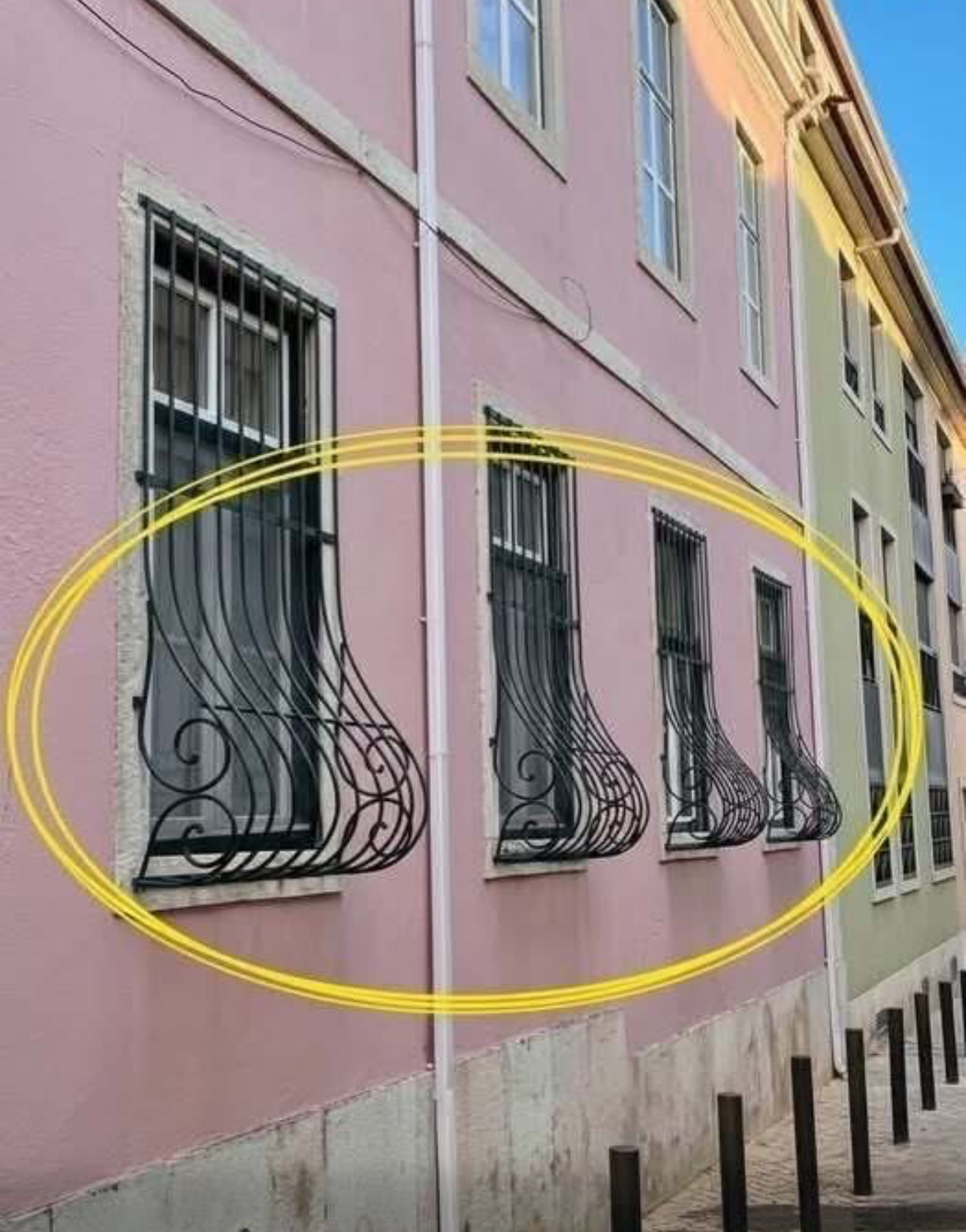
If you have ever walked through an older neighborhood filled with narrow streets, weathered buildings, and balconies covered in plants, you may have noticed an unusual feature on some windows. Instead of lying flat against the glass, certain iron bars curve outward, creating a rounded shape that extends beyond the wall. At first glance, these bulging window grilles might seem like decorative elements added simply for visual character. However, their design actually reflects a practical solution developed to solve everyday challenges in urban living.
Originally, window bars were installed primarily for security. Long before modern alarm systems or surveillance technology, iron grilles provided a straightforward way to protect homes while still allowing light and fresh air inside. In many dense neighborhoods where houses were built close to the street, ground-floor windows were especially vulnerable. Installing metal bars offered a reliable barrier against unwanted entry while maintaining ventilation. Yet these early versions were usually flat, which limited how residents could use the space around their windows.
Over time, people realized that slightly curving the bars outward created a small pocket of extra space between the window and the grille. This simple adjustment transformed the window into something more versatile. The added depth allowed residents to place small items safely outside the glass—flower pots, herbs, or even small household objects—without sacrificing security. In apartments or homes with limited outdoor space, this feature became particularly valuable, turning ordinary windows into tiny extensions of the living area.
Today, these outward-curving window bars remain a familiar sight in many older neighborhoods around the world. Beyond their functional purpose, they add texture and character to building façades and often become charming displays of everyday life. Some hold colorful plants, while others simply frame the window in decorative ironwork. What began as a practical solution eventually evolved into a distinctive architectural detail, reminding us that thoughtful design often grows from simple ideas that make daily life just a little easier.