
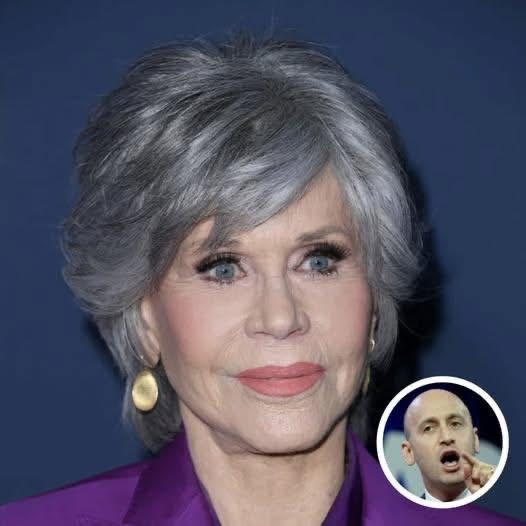
Public discussions about historical events often return when new voices weigh in or when past controversies are revisited in modern political conversations. Such is the case with actress and activist Jane Fonda, whose actions during the Vietnam War era continue to spark debate decades later. For many observers, her story reflects broader questions about protest, patriotism, and the responsibilities of influential public figures. The renewed attention shows how historical moments can remain relevant long after the events themselves have passed.
The latest round of discussion gained momentum after comments from political figure Stephen Miller during a televised appearance on Fox News. Miller suggested that Fonda’s activism in the early 1970s should still play a role in how people evaluate her public legacy today. His remarks reignited conversations about the Vietnam War period, a time when American society was deeply divided over military involvement overseas. For some viewers, the debate highlights the continuing impact of historical decisions made by prominent individuals.
Much of the controversy traces back to Fonda’s 1972 visit to North Vietnam near the end of the conflict. At that time, she was already widely known for her acting career but had also become active in the anti-war movement. During the visit, she spoke publicly against the war and participated in radio broadcasts directed at American troops, urging an end to the fighting. A photograph taken during the trip—showing her seated near a North Vietnamese anti-aircraft gun—quickly circulated and became one of the most discussed images associated with her activism.
Over the years, Fonda has repeatedly addressed the incident and expressed regret about the photograph, acknowledging that it caused pain for many veterans and their families. While some critics believe the moment should remain central to how her career is judged, others argue that her later achievements in film, philanthropy, and social advocacy should also be considered when evaluating her legacy. The continuing conversation reflects how society often wrestles with the complexity of public figures, balancing past controversies with decades of subsequent work and influence.