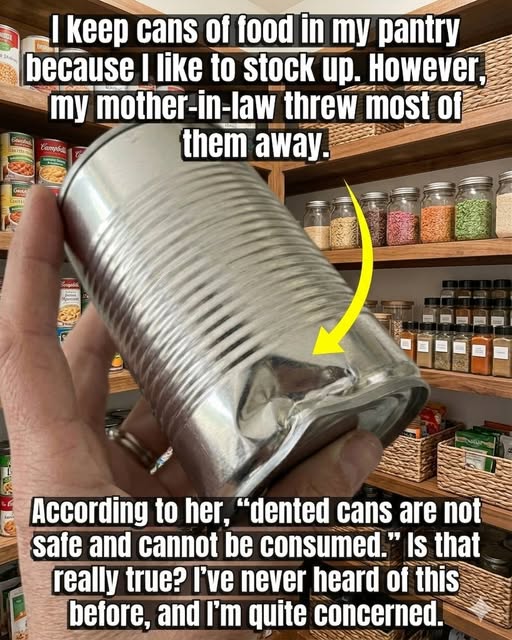
A slightly dented can sitting on your shelf may not raise immediate concern, but it deserves a closer look. Canned foods remain safe for extended periods because they are sealed in sterile, airtight conditions. This protective barrier keeps bacteria out and preserves freshness. However, when the integrity of that seal is compromised—even in a subtle way—the safety of the food inside can become uncertain.
Understanding the type of damage is essential. Significant dents, especially those located along seams or edges, are the most problematic because they can weaken the seal where it matters most. Other warning signs include swelling, visible rust, leaks, or unusual odors upon opening. These indicators suggest that the contents may no longer be safe, even if the food appears unchanged. In such situations, discarding the item is the safest choice.
On the other hand, minor surface dents that are smooth and located away from the seams are generally less concerning. These typically do not affect the can’s airtight structure. Still, caution is key. If you are unsure how the dent occurred or have any doubts about the condition of the can, it is better to avoid taking unnecessary risks.
A proactive approach to pantry management can make a big difference. Inspect cans regularly, store them in a dry and stable environment, and use older items first to prevent long-term storage damage. By paying attention to small details like these, you can maintain both the quality of your food and confidence in your kitchen routines.