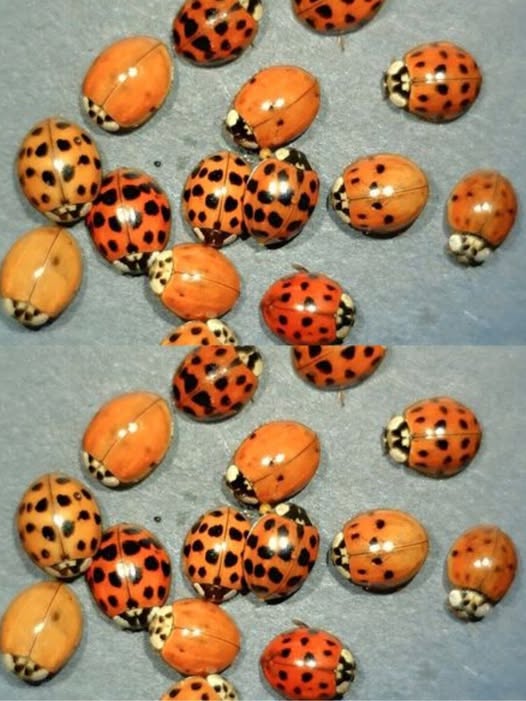
Coming across a yellow ladybug can feel like a cheerful interruption to an ordinary day. Since most people expect ladybugs to be red with black spots, a golden-yellow version instantly catches the eye. These tiny insects seem to glow against greenery, often creating a moment of curiosity and quiet happiness. It’s the kind of small discovery that makes people pause and smile without quite knowing why.
Yellow ladybugs are not unusual or mythical—they’re a natural part of the insect world. Ladybugs belong to the Coccinellidae family, which includes thousands of species worldwide, appearing in a wide range of colors beyond red. Certain species, such as the 14-spotted ladybug, are naturally yellow and have distinctive markings that set them apart once you’re familiar with them.
Their bright coloring isn’t just for show. In nature, yellow acts as a warning signal to predators, indicating that the insect may taste unpleasant or be toxic. This protective coloring helps keep ladybugs safe while they continue playing an important role in ecosystems. Like their red relatives, yellow ladybugs feed on garden pests such as aphids, making them helpful allies for plants and growers alike.
Beyond biology, many people attach positive symbolism to yellow ladybugs. The color yellow is commonly associated with warmth, optimism, and new beginnings, which leads some to see these insects as signs of good fortune or positive change. Whether viewed through a symbolic lens or a scientific one, spotting a yellow ladybug is a gentle reminder that nature often offers beauty and meaning in the smallest, most unexpected ways.