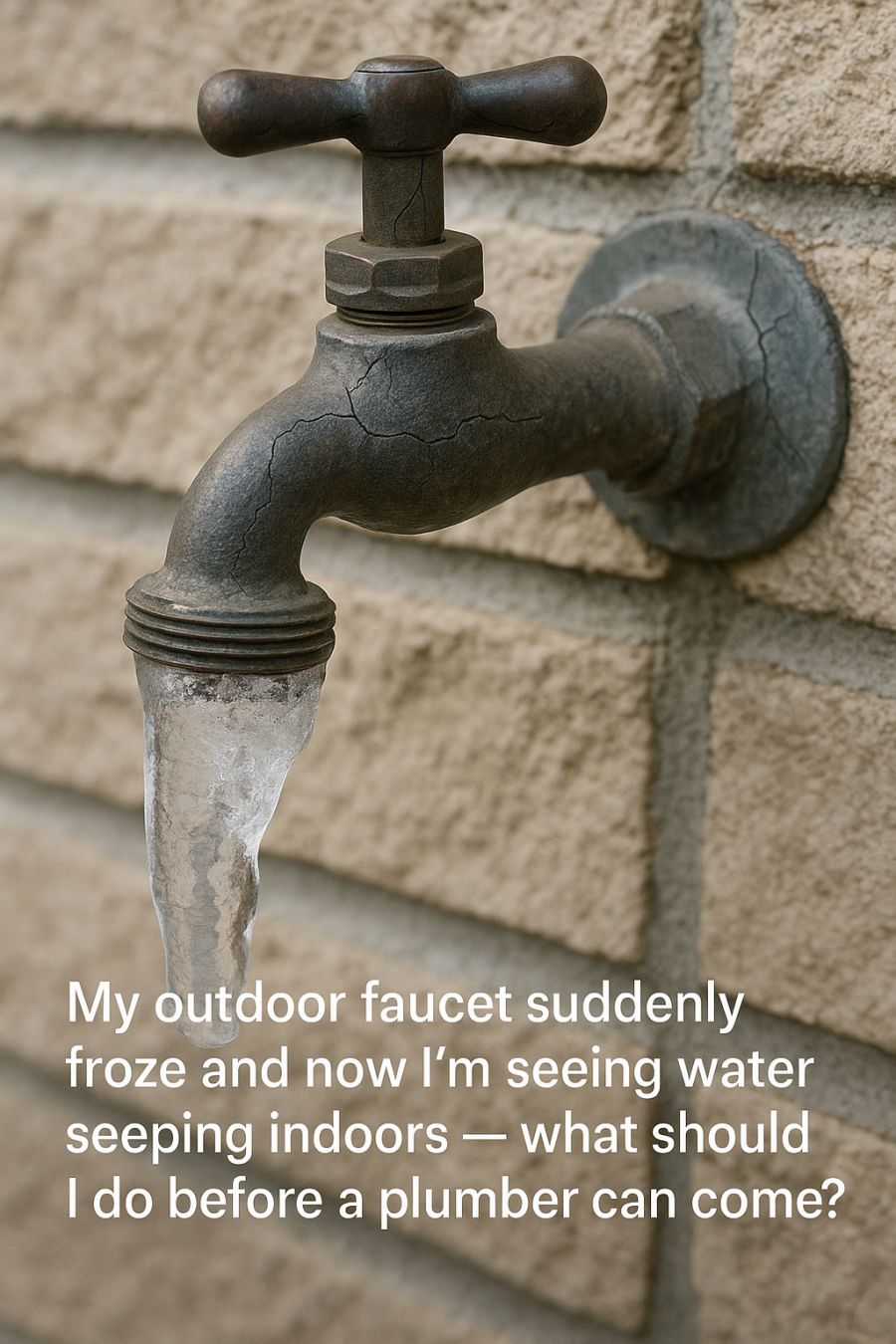
Cold winter weather can be beautiful, but it also puts outdoor plumbing at risk. Exterior faucets are especially vulnerable because trapped water can freeze, expand, and place pressure on pipes. When this happens, leaks may appear inside the home, sometimes without warning. Acting quickly and calmly can limit damage while you prepare for professional help.
The first and most important step is to stop the water flow. Locate the shut-off valve that controls the outdoor faucet, usually found just inside the house near where the pipe exits the wall. Turn it fully closed. If you can’t identify that valve, shut off the main water supply to the home. Once the water is off, focus on containing any moisture by using towels, buckets, or a wet/dry vacuum, and move nearby items out of harm’s way.
After the area is secure, address safety concerns. If water is close to electrical outlets or appliances, switch off power to that section of the house from the electrical panel. To thaw the frozen faucet or pipe, use gentle heat such as a hairdryer on a low setting or warm towels wrapped around the pipe. Keep the faucet slightly open during thawing to relieve pressure. Avoid open flames or extreme heat, as these can damage pipes and create additional hazards.
Once the immediate issue is under control, take steps to document any damage with photos or notes for insurance purposes. Temporary measures like pipe repair tape can help slow leaks, but a plumber should inspect the system as soon as possible. To prevent future problems, insulate exposed pipes, disconnect hoses before winter, and consider installing frost-proof outdoor faucets. A few preventative steps can make a big difference in protecting your home during cold seasons.