
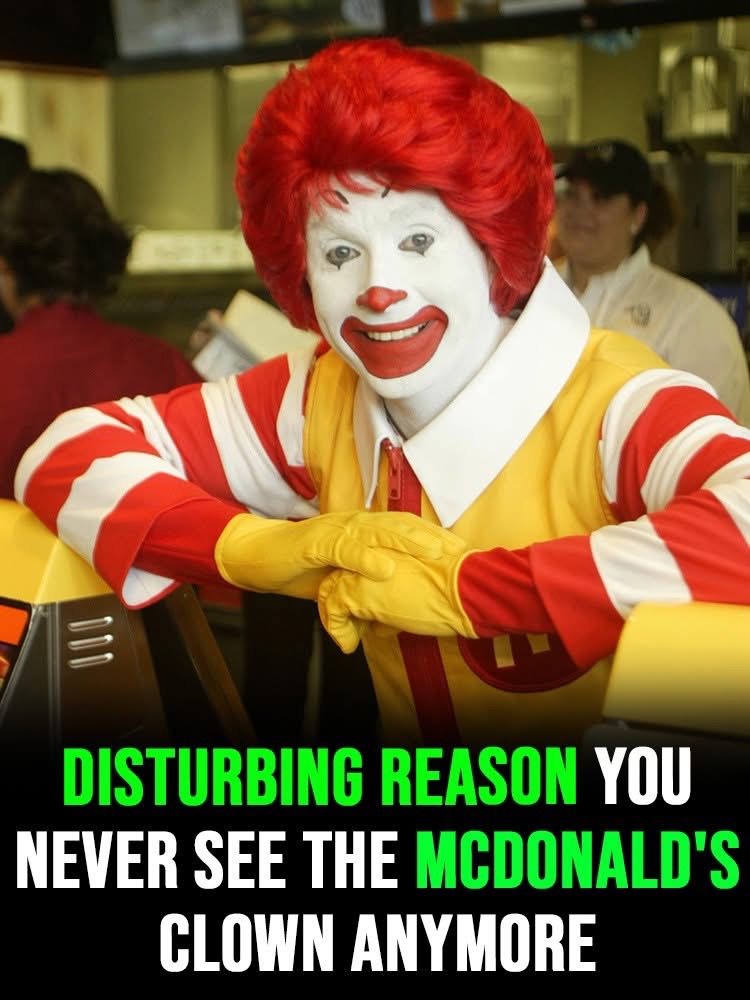
For many years, Ronald McDonald was one of the most recognizable characters associated with family dining. The cheerful clown mascot appeared in television commercials, community events, and restaurants around the world. Yet over time, his presence in advertising quietly faded, leaving many people wondering what happened to such a familiar figure from their childhood.
During the height of his popularity, Ronald McDonald was closely connected with the brand’s image. He welcomed families at restaurant openings, participated in charitable visits to schools and hospitals, and appeared in commercials designed to create a fun, welcoming atmosphere for children. For many families, the character symbolized birthday parties, playground visits, and memorable meals shared with friends.
As the years passed, marketing trends and cultural preferences began to change. Many companies shifted toward simpler brand designs and digital-focused advertising rather than relying heavily on mascots. At the same time, public conversations around clown imagery became more complex, particularly after reports of unsettling clown-related incidents gained attention in 2016. In response to the changing climate, McDonald’s chose to limit Ronald McDonald’s public appearances.
Although the character is no longer as visible in advertisements, Ronald McDonald has not disappeared completely. He continues to be associated with community initiatives such as Ronald McDonald House Charities, which supports families with children receiving medical care. Today, his reduced presence reflects a broader evolution in branding while still preserving a connection to the charitable work that carries his name.