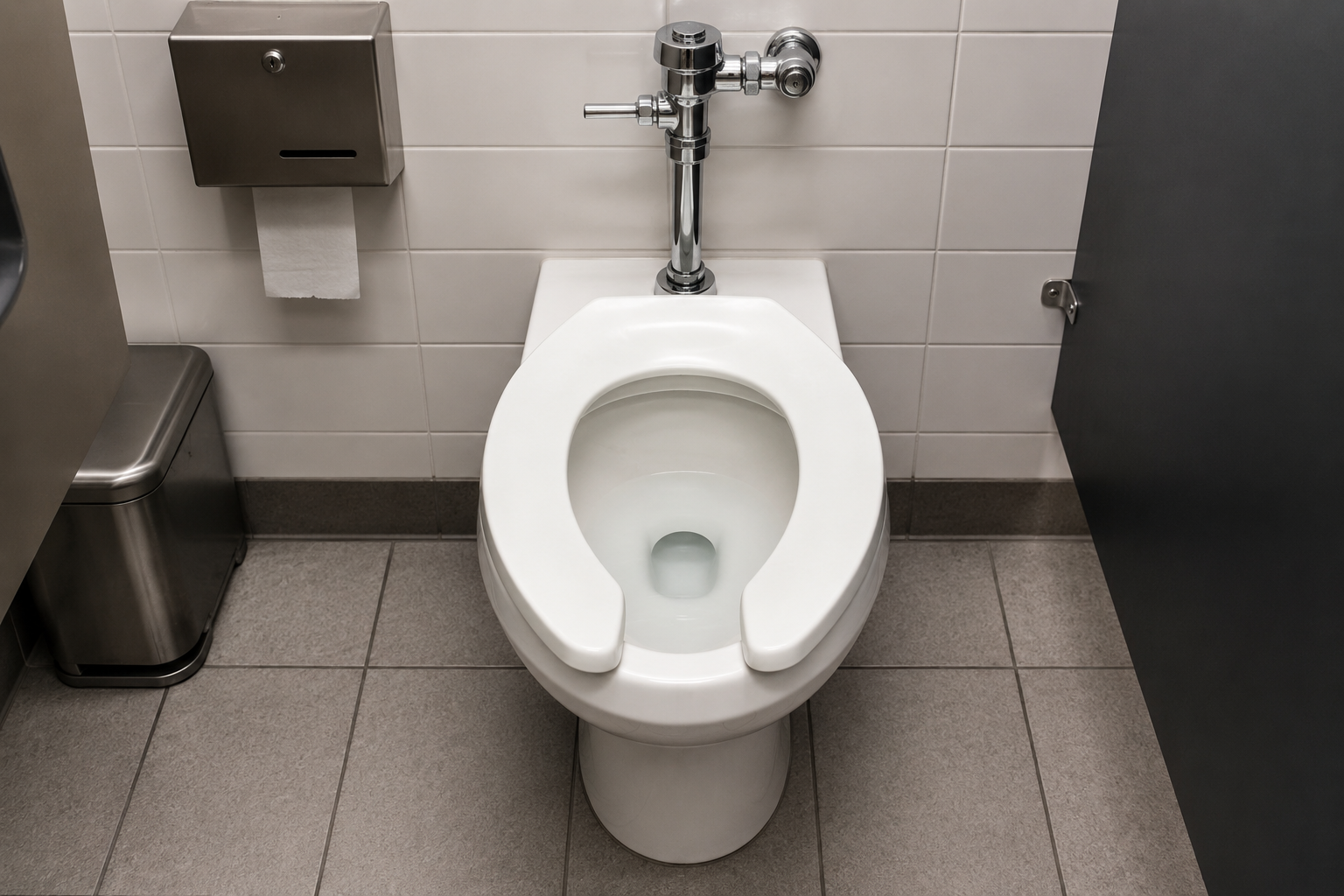
Most people have encountered a U-shaped toilet seat in a public restroom without giving it much thought. At first glance, the opening at the front may seem unusual or even incomplete. In reality, this design is intentional and has been widely adopted for practical reasons. Engineers and facility planners developed the open-front seat to improve hygiene, simplify maintenance, and create a more efficient experience in high-traffic public spaces.
One of the primary advantages of the U-shaped design is that it supports easier cleaning. Public restrooms in places such as airports, schools, shopping centers, office buildings, and transportation hubs are used by large numbers of people every day. The open-front shape provides better access to areas that require regular sanitation, allowing maintenance staff to clean surfaces more thoroughly and efficiently. This practical feature helps facilities maintain higher cleanliness standards while reducing the time needed for routine upkeep.
The design also promotes comfort and functionality for a wide range of users. Commercial restroom standards often recommend open-front toilet seats because they provide additional clearance and are well suited for shared environments. In addition, the design uses slightly less material than a fully enclosed seat, which can make manufacturing and replacement more cost-effective for organizations responsible for maintaining large numbers of restroom fixtures. While the material savings for one seat are modest, they become more meaningful across hundreds of installations.
Although U-shaped toilet seats are most commonly found in commercial settings rather than private homes, their popularity is based on thoughtful engineering rather than appearance alone. Like many everyday products, they are designed to solve practical challenges through simple adjustments. The next time you notice an open-front toilet seat, you’ll know it isn’t missing a piece—it is a carefully considered feature created to support cleanliness, efficiency, and reliable performance in busy public facilities.